| Riyadh, Saudi Arabia - Jul 16, 2025
Why Every Brand Needs a Flexible Logo System in Riyadh, Saudi Arabia
A logo is often seen as one final design.
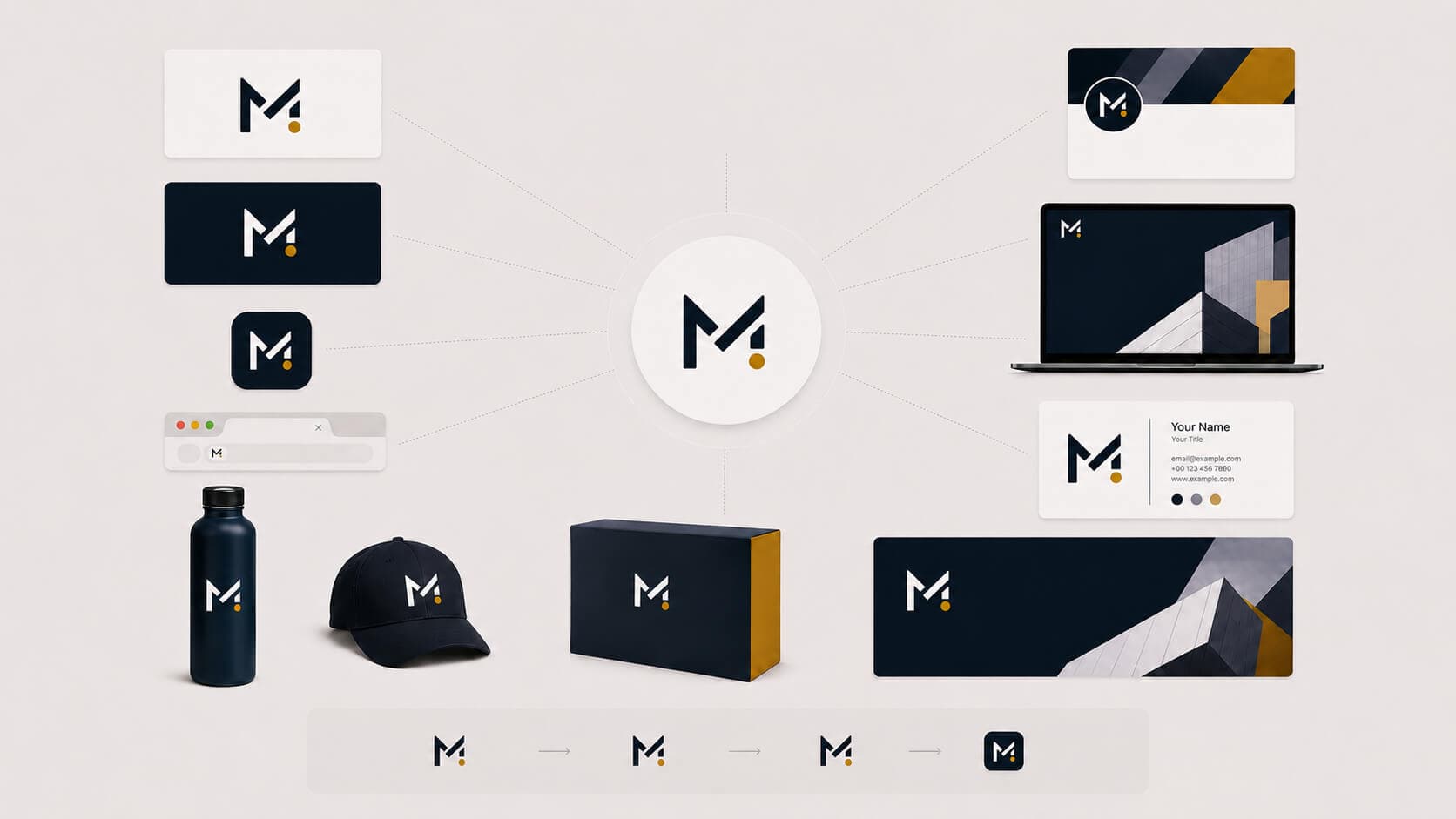
In reality, modern brands need a logo system, not only one logo file. A single version may look strong in a presentation, but it may not work properly across every digital and physical touchpoint. The same logo may need to appear on a website header, mobile menu, social profile image, app icon, video watermark, email signature, proposal, package, ad, and tiny browser tab.
If the logo does not adapt, the brand becomes harder to recognize.
A flexible logo system gives the brand different approved versions of the same identity. These versions help the logo stay clear, usable, and consistent in different spaces. The brand does not need to redesign the logo every time it appears somewhere new. It already has a system that protects recognition.
For businesses operating in Saudi market, this matters because audiences meet brands across many channels before they make a decision. Someone may see a brand on social media, then search for it, visit the website, watch a video, receive an email, and see an ad later. If the logo looks inconsistent or unclear in each place, the brand loses strength.
This is why brand identity development that creates flexible and recognizable visual systems should include more than one logo version from the beginning.
A logo should not only look good once.
It should work everywhere.
What a Flexible Logo System Means
A flexible logo system is a set of approved logo versions designed for different placements and sizes.
It allows the brand to use the right version in the right context while keeping the same identity. The goal is not to create several unrelated logos. The goal is to create one connected system with practical variations.
A flexible logo system can include:
- primary logo
- secondary logo
- horizontal logo
- stacked logo
- icon mark
- wordmark
- symbol version
- one-color version
- dark background version
- light background version
- favicon version
- social profile version
- video watermark version
Each version has a purpose.
The primary logo may work well on a website or presentation. The icon may work better as a profile picture. The wordmark may work in a clean header. The one-color version may work for simple applications. The favicon may work in browser tabs.
Without a system, brands often improvise.
With a system, the logo stays consistent.
Why One Logo Is No Longer Enough
Digital platforms have changed how brands are seen.
In the past, a logo may have been used mainly on signs, business cards, brochures, and printed material. Today, the same brand identity must work across many digital spaces with different rules, sizes, crops, backgrounds, and screen formats.
One logo cannot always solve every use case.
A long horizontal logo may look elegant on a desktop website but become unreadable inside a small circular social media profile picture. A detailed symbol may look beautiful in large format but disappear as a favicon. A logo with a tagline may work in a company profile but become too crowded on mobile.
This is why brands need flexibility.
A flexible logo system helps the brand remain recognizable even when the format changes. It protects the identity from being stretched, cropped, simplified incorrectly, or changed by different team members.
This connects with logo design that balances clarity, personality, and long-term recognition.
A strong logo is not only a design asset.
It is a practical identity tool.
Flexibility Protects Brand Recognition
Brand recognition depends on consistency.
When people see the same visual signals repeatedly, they begin to remember the brand. These signals may include shape, color, typography, symbol, spacing, and overall visual style. If these signals change too much from one platform to another, recognition becomes weaker.
A flexible logo system keeps the core identity consistent while allowing the logo to adapt.
The audience may see the full logo on a website, the symbol on a profile image, and the one-color version on an ad. If the system is designed well, all these versions still feel connected.
This is important because audiences do not always study logos carefully. They recognize them quickly through repeated visual memory.
A flexible system helps create that memory.
It makes sure every version of the logo still points back to the same brand.
Digital Platforms Need Different Logo Versions
Every digital platform has different requirements.
A website needs a logo that fits the header without affecting navigation. A mobile menu needs a version that stays clear on smaller screens. A social profile needs a version that works in a square or circular crop. A video needs a logo that can appear as a watermark without distracting from the content. A favicon needs a simple mark that remains visible at a very small size.
This is why a logo system should be built around real use cases.
Digital placements may include:
- website header
- mobile navigation
- browser favicon
- social media profile image
- story highlight icon
- reel cover
- video watermark
- digital ad
- email signature
- app icon
- presentation cover
- landing page
- newsletter header
Each placement has different limitations.
If the brand only has one logo file, the team may force it into spaces where it does not work. This can lead to poor cropping, unreadable text, weak visibility, or inconsistent modifications.
A flexible system prevents these problems before they happen.
A Responsive Logo System Makes Brands More Practical
A responsive logo system adapts depending on size and context.
At large sizes, the full logo may include the symbol and wordmark. At medium sizes, the logo may become more compact. At small sizes, the symbol alone may be used. At very small sizes, the mark may be simplified further.
This allows the logo to remain clear at every level.
Responsive logo systems are especially important for digital-first brands because screens constantly change. A brand may be viewed on a desktop, tablet, mobile phone, smartwatch, video screen, or app interface.
The logo needs to respond without losing identity.
A responsive logo system can help brands:
- improve small-size clarity
- protect visual consistency
- avoid forced cropping
- support different layouts
- improve mobile usability
- strengthen recognition
- make design work faster
- reduce incorrect logo usage
The best systems feel simple to the audience.
The complexity stays behind the scenes.
Logo Variations Should Still Feel Connected
A flexible logo system should not feel random.
Every version should share the same visual logic. The symbol, typography, proportions, spacing, and color rules should feel connected. The audience should not feel like they are seeing different brands.
This is where strategy matters.
The system should define which elements are fixed and which elements can adapt. For example, the symbol may stay the same, while the layout changes. The color system may stay consistent, while the logo shifts between full-color and one-color versions. The typography may remain constant, while the logo appears horizontally or stacked.
A strong system creates freedom with rules.
This connects with branding guidelines that keep visual identity consistent across teams, platforms, and customer touchpoints.
Flexibility without rules creates confusion.
Flexibility with rules creates consistency.
Why Small Sizes Reveal Logo Problems
A logo may look strong when large, but digital use often happens at small sizes.
This is where problems appear. Thin lines may disappear. Small text may become unreadable. Complex shapes may blur. Tight spacing may close up. Decorative details may turn into visual noise.
Small-size testing is one of the most important parts of logo system development.
A logo should be tested as:
- a social media profile image
- a favicon
- a mobile header logo
- a video watermark
- a small ad logo
- a story highlight icon
- an email signature logo
- an app icon
If the logo fails in these situations, the system needs adjustment.
A flexible logo system solves this by creating simplified versions for smaller spaces. Instead of forcing the full logo everywhere, the brand uses the version that fits the placement.
This keeps the identity clear even when space is limited.
Social Media Needs Logo Flexibility
Social media places logos under constant pressure.
Profile pictures are small. Circular crops can cut off details. Feed posts move quickly. Reel covers need immediate recognition. Story highlights need simple icons. Paid ads need fast brand identification.
A logo that works on social media should be clear in seconds.
For many brands, the full logo is not the best social media profile image. A symbol, monogram, or simplified mark may work better. The brand name can still appear in the profile name, bio, captions, and content design.
This connects with social media strategies that keep brand presence clear and consistent across platforms.
A strong logo system helps the brand show up properly across social media without stretching or altering the logo.
It makes the page look more professional.
It also helps the audience recognize the brand faster.
Websites Need Practical Logo Systems
A website often needs more than one logo version.
The desktop header may need a horizontal logo. The mobile menu may need a shorter version. The footer may use a one-color version. The favicon may use only the symbol. A landing page may use a simplified mark. A dark section may need a light logo version.
If these versions are not prepared, the website design may become inconsistent.
This connects with website design and development that turns brand identity into a clear digital experience.
A practical logo system improves website design because the logo can fit naturally into the layout. It does not need to be squeezed into the header or modified during development.
The logo should support the website experience.
It should not create layout problems.
Logo Systems Improve Team Consistency
A flexible logo system also helps internal teams.
When employees, designers, agencies, and partners do not know which logo to use, mistakes happen. Someone may use an old version. Someone may stretch the logo. Someone may place it on a low-contrast background. Someone may crop it incorrectly. Someone may recolor it without approval.
A clear logo system reduces these mistakes.
It gives the team approved options and clear rules.
The system should explain:
- which logo version to use
- where each version belongs
- minimum size rules
- clear space rules
- color rules
- background rules
- incorrect usage
- file format guidance
- social media usage
- website usage
- print usage
This makes brand management easier.
The team does not need to guess.
File Formats Support Flexibility
A logo system is only useful if the brand has the right file formats.
A beautiful logo can look weak if the files are low quality. It may become blurry, pixelated, stretched, or inconsistent across platforms.
A strong logo package should include:
- SVG files for scalable digital use
- PNG files with transparent backgrounds
- JPG files for basic image use
- PDF files for sharing
- design source files when needed
- favicon files
- icon files for digital platforms
SVG is important for websites because it stays sharp at different sizes. PNG is useful for transparent use. JPG is less flexible but can still be useful in simple contexts. Favicon and icon files help the logo work in very small digital spaces.
A flexible logo system should not live as one image file.
It should be delivered as a complete identity package.
Color Versions Keep the Logo Usable
A strong logo system should include clear color versions.
The logo may need to appear on light backgrounds, dark backgrounds, images, videos, printed items, ads, and digital layouts. One color version will not always work.
Approved color versions can include:
- full-color logo
- black logo
- white logo
- one-color logo
- reversed logo
- grayscale logo
- dark background version
- light background version
These versions protect the brand from inconsistent edits.
Without approved versions, people may recolor the logo randomly just to make it visible. This weakens the identity over time.
Color consistency matters because color is one of the fastest recognition signals in branding.
A flexible logo system keeps color controlled.
Brand Guidelines Make the System Work
A logo system needs guidelines.
Without guidelines, people may have many logo files but still use them incorrectly. The guidelines explain the logic behind the system and make it easier for everyone to apply the brand correctly.
Brand guidelines should show:
- all approved logo versions
- when to use each version
- minimum sizes
- clear space
- color values
- background usage
- incorrect examples
- file format notes
- digital usage examples
- print usage examples
Guidelines should be easy to understand and practical to use.
A long brand book is not always useful if the team cannot apply it quickly. The strongest guidelines are clear, visual, and direct.
A flexible logo system becomes valuable when people actually use it correctly.
Common Mistakes Brands Make
Many brands create a logo but do not create a system.
This leads to problems later, especially when the brand grows and starts appearing across more platforms.
Common mistakes include:
- using one logo for every placement
- not creating an icon version
- not testing small sizes
- using taglines inside the main logo
- lacking dark and light versions
- not providing proper file formats
- allowing random recoloring
- ignoring social media crops
- forgetting favicon design
- not documenting logo rules
- using inconsistent versions across teams
- stretching or distorting the logo
These mistakes may seem small, but they affect how professional and recognizable the brand feels.
A strong logo system avoids these problems early.
Real World Application
A business in Saudi Arabia may start with one logo and use it everywhere.
At first, this may seem simple. But as the brand grows across Riyadh, Jeddah, Mecca, Dammam, the same logo may be needed on social media, website pages, ads, email templates, videos, proposals, and mobile layouts. The business may notice that the logo becomes unreadable in small spaces, does not fit profile images, or looks inconsistent on dark backgrounds.
A flexible logo system solves this.
The business can prepare a primary logo for formal use, a simplified icon for social media, a horizontal version for the website, a one-color version for ads, a white version for dark backgrounds, and a favicon for browser tabs.
This gives the brand a clearer and more professional presence.
The audience sees one consistent identity across many spaces.
Expert Perspective from The iBoost
At The iBoost, we believe a logo should be built as a system from the beginning.
A single logo file is rarely enough for modern brand communication. Brands need flexible versions that work across websites, social media, advertising, videos, presentations, and digital touchpoints.
Through logo design and brand identity services that create flexible and recognizable visual systems, we help businesses build logo systems that protect recognition and support long-term consistency.
For businesses in Saudi Arabia, a flexible logo system can make the brand easier to apply, easier to manage, and easier to remember.
The strongest logos do not only look good.
They work wherever the brand needs to appear.
Frequently Asked Questions
A flexible logo system is a set of approved logo versions designed for different sizes, platforms, backgrounds, and use cases while keeping the same brand identity.
A brand needs more than one version because the same logo may not work across every platform. Websites, social media profiles, favicons, videos, ads, and mobile screens often need different approved versions.
No. A flexible logo system is not a group of unrelated logos. It is one connected identity with variations that adapt to different placements.
A logo system can include a primary logo, secondary logo, icon, wordmark, horizontal version, stacked version, one-color version, light and dark versions, favicon, and social profile version.
A logo system improves consistency by giving teams approved logo options and clear usage rules, which reduces incorrect edits, poor cropping, and inconsistent brand applications.