| Abuja, Nigeria - Jun 16, 2025
The Importance of Mobile-First Web Design in Nigeria
The way users access websites has changed.
Today, people do not only browse from desktops. They search, compare, shop, book, read, and contact businesses directly from mobile devices. This makes the mobile experience one of the most important parts of modern website performance.
For businesses operating in Nigeria, where digital competition is increasing and user expectations are rising, adopting a mobile first approach is critical. A website that does not perform well on mobile can lose users before they even understand what the business offers.
This is why companies invest in website development strategies that prioritize mobile performance, usability, and scalability.
Mobile first design is not just a design trend.
It is a strategic necessity.
What Is Mobile First Web Design?
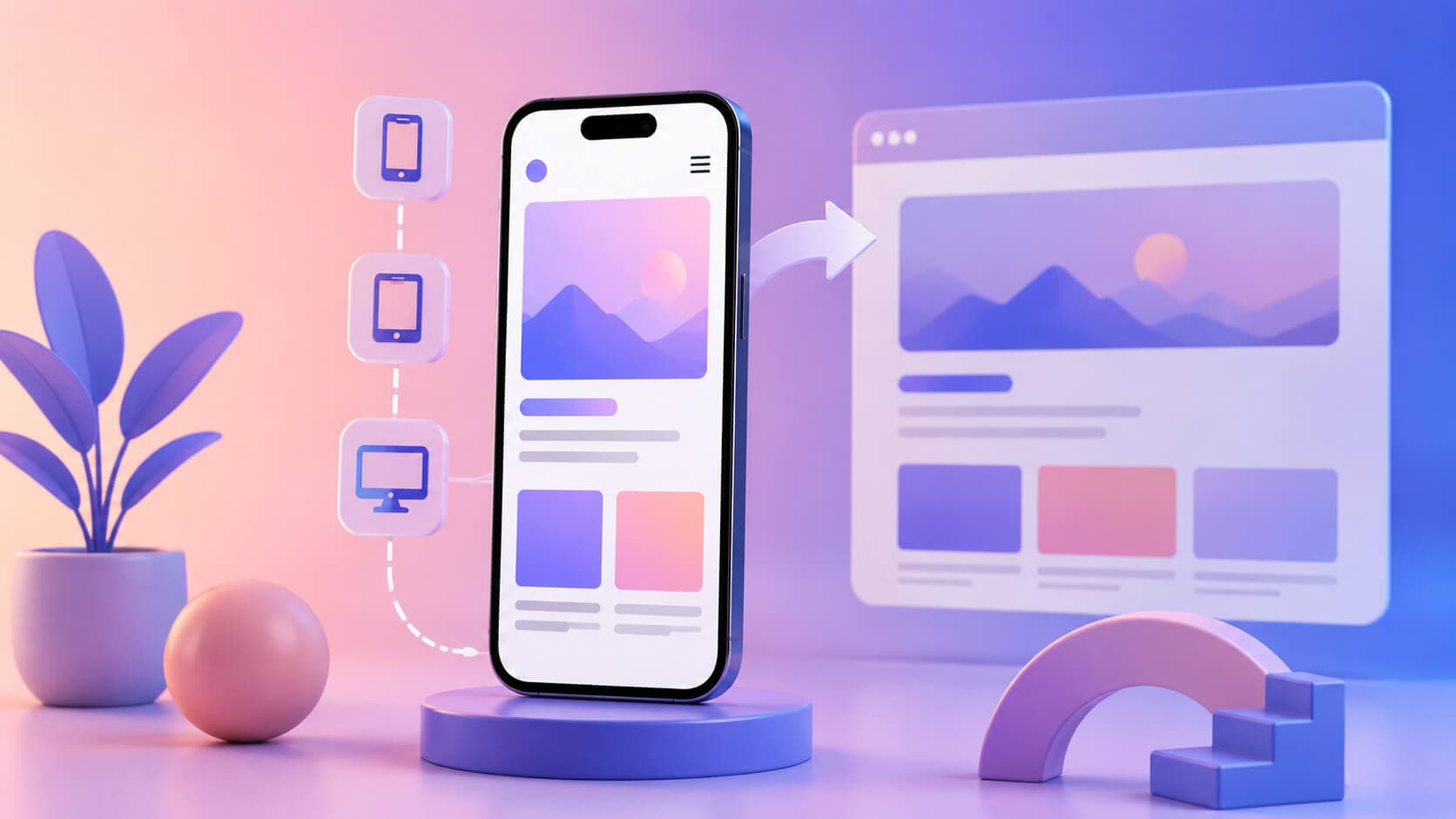
Mobile first web design is an approach where websites are designed for mobile devices first, then adapted for larger screens.
Instead of creating a desktop design and shrinking it down for smaller devices, mobile first design begins with the smallest screen and builds upward.
This approach focuses on:
- Simple navigation
- Fast loading
- Clear content
- Readable typography
- Easy buttons
- Smooth scrolling
- Lightweight layouts
- Strong mobile usability
- Responsive structure
The goal is to make the mobile experience clear, fast, and easy to use.
Once the mobile experience is strong, the design can then expand for tablets, laptops, and desktop screens.
Why Mobile First Matters
Mobile first matters because users expect websites to work smoothly on every device.
If a mobile website is slow, hard to navigate, or difficult to read, users are more likely to leave. This affects engagement, trust, conversions, and search performance.
Mobile first design improves:
- User experience
- Engagement
- SEO performance
- Conversion rates
- Accessibility
- Mobile usability
- Page speed
- Customer satisfaction
Across Nigeria, where mobile usage continues to grow, these factors directly influence business performance.
A strong mobile experience can help users stay longer, explore more pages, and take action more confidently.
Mobile First vs Desktop First Design
Mobile first and desktop first design follow different priorities.
Mobile first design begins with smaller screens and focuses on essential content, simple structure, and fast performance.
Desktop first design starts with larger screens, then adapts the layout down to mobile.
The difference is clear:
- Mobile first prioritizes small screens
- Desktop first adapts down to mobile
- Mobile first improves usability
- Desktop first can create friction
- Mobile first focuses on essential content
- Desktop first can become crowded on mobile
- Mobile first supports faster performance
- Desktop first may require more adjustments later
Mobile first ensures a smoother experience across all devices because it starts with the most limited screen space.
When the smallest version works well, the larger versions become easier to build.
Why Many Websites Still Fail on Mobile
Many websites still fail on mobile because they were not designed around real mobile behavior.
A desktop layout may look impressive on a large screen, but when it is compressed into mobile, the experience can become difficult. Text may become too small. Buttons may be hard to tap. Menus may feel confusing. Pages may load slowly.
Common mobile issues include:
- Poor responsiveness
- Slow loading times
- Difficult navigation
- Unreadable content
- Misaligned layouts
- Buttons that are too small
- Overloaded pages
- Large unoptimized images
- Forms that are hard to complete
- Popups that block content
These issues reduce engagement and conversions in Nigeria.
A website can look beautiful on desktop and still fail users on mobile.
How Mobile First Improves Performance
Mobile first design improves performance because it focuses on the user’s real browsing environment.
Users on mobile need speed, clarity, and simplicity. They should be able to understand the page, move through content, and take action without friction.
Better Usability
Mobile first design improves usability by making navigation easier on smaller screens.
Menus are simplified. Buttons are easier to tap. Content is organized clearly. Forms become shorter and easier to complete.
Better usability helps users find what they need faster.
This creates a smoother experience and reduces frustration.
Faster Load Times
Mobile optimized websites are usually lighter and faster.
Because mobile first design focuses on essential content and efficient layouts, it helps reduce unnecessary weight. Images, scripts, animations, and page elements can be optimized from the beginning.
Fast loading matters because users often leave slow websites.
Speed supports both user experience and business performance.
Improved SEO
Search engines prioritize websites that provide strong mobile experiences.
A mobile friendly website helps users access content easily, which supports search visibility and engagement. If a website performs poorly on mobile, it can limit SEO performance.
Mobile first design supports SEO by improving:
- Mobile usability
- Page speed
- Content accessibility
- User engagement
- Technical structure
- Core Web Vitals
A strong mobile experience helps both users and search engines understand and trust the website.
Higher Conversions
Mobile first design can improve conversion rates because it reduces friction.
When users can easily read content, navigate pages, tap buttons, complete forms, and reach calls to action, they are more likely to convert.
Mobile first design can improve:
- Form submissions
- Phone calls
- WhatsApp clicks
- Online purchases
- Bookings
- Quote requests
- Newsletter signups
- Lead generation
A simplified experience increases action rates.
This aligns with user experience design that improves usability and interaction across devices.
Mobile First and User Experience
Mobile first design is strongly connected to user experience.
A mobile user often has less time, a smaller screen, and more distractions. The website must make the journey simple.
A strong mobile user experience should include:
- Clear page hierarchy
- Simple navigation
- Short sections
- Readable text
- Easy-to-click buttons
- Fast loading
- Clear calls to action
- Minimal distractions
- Smooth forms
- Accessible design
Good mobile UX helps users feel in control.
When the experience feels effortless, users are more likely to stay and engage.
Mobile First and Website Design
Mobile first does not mean sacrificing visual quality.
A mobile first website can still feel premium, creative, and visually strong. The difference is that design decisions are made with usability and performance in mind.
Strong mobile first website design includes:
- Clean layouts
- Strong typography
- Optimized images
- Clear spacing
- Simple sections
- Responsive components
- Focused content
- Consistent branding
The design should support the user journey.
Visual appeal matters, but it should never make the mobile experience harder to use.
Mobile First and Content Strategy
Mobile users scan content quickly.
This means content should be structured clearly and written in a way that is easy to read on smaller screens.
Mobile first content should be:
- Clear
- Concise
- Well structured
- Easy to scan
- Organized with headings
- Supported by strong calls to action
- Focused on user needs
Long paragraphs, crowded layouts, and unclear sections can make mobile pages harder to read.
Content should guide users quickly from interest to action.
Mobile First and E-commerce
Mobile first is especially important for e-commerce.
Many users browse and shop from mobile devices. If the shopping experience is difficult, users may abandon the journey before completing a purchase.
A strong mobile first e-commerce experience should include:
- Fast product pages
- Clear product images
- Easy filtering
- Simple navigation
- Visible prices
- Clear add to cart buttons
- Smooth checkout
- Short forms
- Secure payment flow
Every extra step can increase friction.
Mobile first design helps make the buying process easier and more efficient.
When Businesses Should Adopt Mobile First Design
Businesses should prioritize mobile first design when they want better performance, stronger user experience, and higher conversion potential.
This is especially important when:
- Launching a new website
- Expanding in Nigeria
- Improving conversion rates
- Increasing mobile traffic
- Competing in digital markets
- Redesigning an outdated website
- Building an e-commerce platform
- Improving SEO performance
- Reducing bounce rates
- Improving lead generation
Mobile first should not be treated as a future improvement.
It should be part of the website strategy from the beginning.
Common Mobile First Mistakes
Some businesses think mobile first simply means making a website responsive.
Responsiveness is important, but it is not enough. A responsive website can still feel slow, crowded, or difficult to use if the experience is not designed properly.
Common mistakes include:
- Designing desktop first and adjusting later
- Using oversized images
- Adding too many sections
- Making buttons too small
- Using long paragraphs
- Hiding important calls to action
- Creating complicated menus
- Ignoring page speed
- Using popups that block content
- Not testing on real devices
Mobile first design requires intentional planning.
It is not only a technical adjustment.
Strategic Reality Behind Mobile First
Mobile first design is about prioritizing user behavior.
Users are already browsing, searching, and deciding on mobile. Businesses that design around this behavior create more efficient and effective digital experiences.
Mobile first is not only about layout.
It affects content, speed, SEO, UX, design, conversion, and growth.
A business that ignores mobile risks losing users at the most important stage of the digital journey.
Real World Application
A business in Nigeria that adopts mobile first design can create a stronger website experience for the way users actually browse.
Mobile first design can help the business:
- Improve engagement
- Reduce bounce rates
- Increase conversions
- Improve mobile usability
- Strengthen SEO performance
- Create smoother navigation
- Improve brand perception
- Support paid campaign performance
When mobile users can move through a website easily, they are more likely to take action.
Mobile First and Growth
Businesses expanding in Nigeria, including Abuja, Lagos, Kano, Ibadan and beyond, need scalable digital platforms that perform across all devices.
As a business grows, its website may need more pages, services, content, campaigns, forms, and integrations. A mobile first foundation helps the platform remain usable and efficient as it expands.
Mobile first supports growth by helping businesses build:
- Stronger user experience
- Better SEO foundations
- Higher mobile engagement
- Clearer conversion paths
- Scalable page structures
- More accessible content
- Stronger cross-device performance
A website that performs well on mobile is better prepared for long-term digital growth.
Expert Perspective from The iBoost
At The iBoost, we design websites with a mobile first approach to ensure performance, usability, and scalability.
We focus on creating websites that look strong, load quickly, and guide users clearly across devices. Mobile experience is not treated as an afterthought. It is built into the strategy from the beginning.
Through website development strategies that prioritize mobile performance, usability, and scalability, we help businesses build high-performing digital platforms across Nigeria.
Mobile first design is essential for modern digital success.
For businesses in Nigeria, it improves user experience, SEO, conversions, and long-term website performance.
Frequently Asked Questions
Mobile first web design is an approach where websites are designed for mobile devices first, then adapted for larger screens such as tablets, laptops, and desktops.
Mobile first design is important because many users browse from mobile devices. It improves user experience, engagement, SEO performance, accessibility, and conversion rates.
Mobile first design starts with small screens and builds upward, while desktop first design starts with large screens and adapts downward. Mobile first usually creates a smoother mobile experience.
Mobile first design improves SEO by supporting mobile usability, faster load times, better content accessibility, stronger engagement, and improved technical performance.
A business should adopt mobile first design when launching a website, redesigning an existing platform, improving conversion rates, increasing mobile traffic, or expanding in competitive digital markets.