| Casablanca, Morocco - Jun 02, 2025
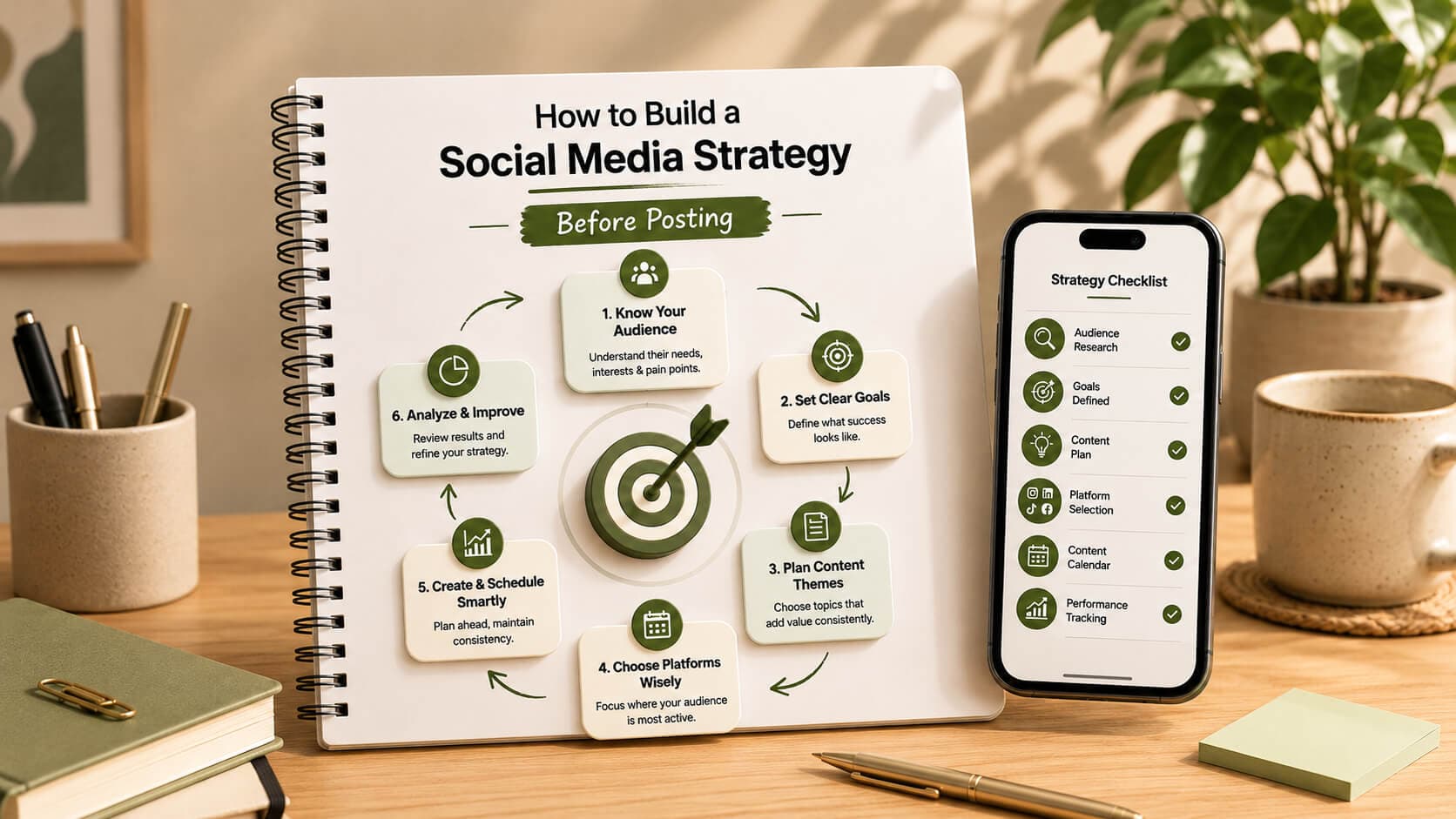
How to Build a Social Media Strategy Before Posting in Casablanca, Morocco
Posting on social media without a strategy often leads to random content, inconsistent messaging, and weak results.
Many businesses start by asking what to post, but the better question is why they are posting and who the content is meant to reach. A strong social media strategy gives every post a clear role and connects daily content to long-term brand and business goals.
For businesses operating in Morocco, building a social media strategy before posting is essential for improving engagement, consistency, and brand visibility. In Moroccan market, audiences expect content that feels relevant, clear, and aligned with the brand.
This is why businesses invest in social media marketing strategies that align content planning, audience engagement, and brand growth.
Social media should not begin with posting.
It should begin with direction.
What a Social Media Strategy Means
A social media strategy is a structured plan that defines how a brand will use social platforms to communicate, engage, and grow.
It guides what to post, where to post, how to speak, and what each piece of content should achieve.
A strong social media strategy includes:
- goals
- target audience
- platform selection
- content pillars
- brand voice
- visual direction
- posting frequency
- engagement approach
- campaign planning
- performance tracking
The goal is to make social media purposeful.
Every post should support a bigger strategy.
Why Strategy Should Come Before Posting
Strategy should come before posting because content without direction is difficult to measure and harder to improve.
A business may post often, but if the content is not connected to clear goals, it may not build awareness, engagement, trust, or conversions.
A social media strategy helps businesses:
- create consistent content
- improve audience connection
- build brand recognition
- avoid random posting
- support campaign goals
- improve engagement
- guide creative direction
- measure performance better
For businesses in Morocco, strategy turns social media activity into a growth tool.
Posting more is not always the answer.
Posting with purpose is.
Strategic Posting vs Random Posting
Strategic posting builds value.
Random posting creates noise.
The difference is clear:
- strategic posting supports business goals
- random posting fills the calendar
- strategic posting speaks to a defined audience
- random posting tries to reach everyone
- strategic posting follows content pillars
- random posting changes direction constantly
- strategic posting builds recognition
- random posting feels disconnected
- strategic posting improves performance tracking
- random posting makes results harder to understand
Social media needs consistency and intention.
A clear strategy helps every post work harder.
Why Many Businesses Struggle on Social Media
Many businesses struggle because they post before defining the strategy.
They may follow trends, copy competitors, or publish content without knowing what the audience needs. This often leads to weak engagement and unclear brand identity.
Common problems include:
- inconsistent messaging
- unclear audience focus
- weak content ideas
- no content pillars
- random visuals
- unclear calls to action
- poor posting structure
- lack of engagement planning
- no performance review
- content that does not support business goals
These issues reduce the impact of social media.
Content should not only be published.
It should be planned.
How to Build a Social Media Strategy Before Posting
Building a social media strategy starts with understanding the brand, the audience, and the purpose of the content.
Define Clear Goals
Before posting, businesses need to define what they want social media to achieve.
Goals can include:
- building brand awareness
- increasing engagement
- driving website traffic
- generating leads
- promoting services
- educating the audience
- building community
- improving trust
- supporting launches
- strengthening brand positioning
Clear goals help guide content decisions.
If the goal is unclear, the content will feel unclear too.
Understand the Audience
A strategy must be built around the audience.
Businesses need to know who they are speaking to, what they care about, and what kind of content they respond to.
Audience understanding includes:
- age group
- location
- interests
- needs
- pain points
- platform behavior
- content preferences
- decision triggers
- objections
- expectations
This connects with brand strategy development that aligns messaging, audience understanding, and communication direction.
When the audience is clear, content becomes more relevant.
Choose the Right Platforms
Not every platform is right for every business.
A strong strategy identifies where the audience is most active and what type of content works best there.
Platform choice may depend on:
- audience behavior
- business type
- content format
- campaign goals
- industry
- budget
- available resources
- growth objectives
For example, a visual brand may focus heavily on Instagram, while a business-to-business company may prioritize LinkedIn.
The right platforms help content reach the right people.
Build Content Pillars
Content pillars are the main themes that guide social media content.
They help prevent random posting and make the content calendar easier to structure.
Content pillars can include:
- education
- brand story
- service highlights
- customer problems
- product features
- behind-the-scenes content
- testimonials
- case studies
- trends
- frequently asked questions
Content pillars create consistency.
They give the brand a clear content direction.
Define Brand Voice
Brand voice determines how the brand sounds.
It affects captions, video scripts, comments, replies, and campaign messages.
A brand voice may be:
- professional
- friendly
- bold
- premium
- educational
- warm
- playful
- direct
- inspirational
- expert-led
The voice should match the brand identity and audience expectations.
A consistent voice makes the brand easier to recognize.
Create Visual Direction
Social media is highly visual.
A clear visual direction helps the brand look consistent across posts, reels, stories, and campaigns.
Visual direction can include:
- colors
- typography
- layout style
- photography style
- video style
- graphic elements
- icon style
- cover design
- motion style
- content templates
This aligns with brand identity systems that create consistent visual recognition across social media content.
A strong visual system helps audiences recognize the brand faster.
Planning Content Before Posting
A strong social media strategy should guide the content plan.
A content plan turns strategy into weekly or monthly execution.
It can include:
- post topics
- content formats
- captions
- video ideas
- campaign themes
- posting dates
- platform adaptation
- creative direction
- calls to action
- performance goals
Planning helps teams stay consistent and organized.
It also makes content creation more efficient.
Matching Content Format to Goal
Different content formats serve different purposes.
A good strategy connects the format to the goal.
Examples include:
- reels for reach and engagement
- carousels for education
- static posts for announcements
- stories for real-time updates
- testimonials for trust
- case studies for credibility
- live content for interaction
- short videos for awareness
The format should support the message.
Content should not be chosen only because it is popular.
Creating a Posting Structure
Posting structure helps maintain consistency.
It defines how often the brand should post and what mix of content should appear.
A posting structure can include:
- weekly content themes
- monthly campaigns
- story frequency
- video frequency
- educational posts
- promotional posts
- engagement posts
- community content
- seasonal content
A clear structure reduces last-minute posting.
It also helps the brand stay active without becoming repetitive.
Social Media Strategy and Engagement
Social media is not only about publishing.
It is also about interaction.
A strong strategy should define how the brand will engage with the audience.
Engagement can include:
- replying to comments
- answering messages
- asking questions
- using polls
- resharing user content
- starting conversations
- responding to feedback
- encouraging participation
Engagement builds relationships.
A brand that only posts but does not interact may lose connection with its audience.
Strategy and Calls to Action
Every post should have a purpose.
A call to action helps guide the audience toward the next step.
Calls to action can encourage users to:
- visit a website
- send a message
- save a post
- comment
- share content
- book a service
- explore a product
- sign up
- ask a question
- learn more
Calls to action should feel natural.
They should match the content and the user journey.
Strategy and Campaign Planning
Social media strategy should support campaigns.
Campaigns help organize content around specific goals, launches, offers, or messages.
A campaign can include:
- awareness posts
- educational content
- short videos
- stories
- paid ads
- testimonials
- launch announcements
- reminder posts
- conversion-focused content
This connects with digital marketing strategies that connect social media content with campaign goals and measurable performance.
Campaign planning helps social media content feel connected.
It prevents isolated posts from feeling random.
Measuring Social Media Performance
A strategy must include performance tracking.
Without measurement, businesses cannot know what is working.
Important metrics may include:
- reach
- impressions
- engagement rate
- profile visits
- website clicks
- saves
- shares
- comments
- inquiries
- leads
- conversions
The right metrics depend on the goal.
For example, awareness content should not be judged only by sales. Lead generation content should not be judged only by likes.
Common Social Media Strategy Mistakes
Many businesses lose performance because they treat social media as posting only.
Common mistakes include:
- posting without goals
- trying to reach everyone
- copying competitors
- using inconsistent visuals
- changing tone too often
- ignoring audience behavior
- having no content pillars
- posting only promotional content
- not reviewing performance
- creating content without a clear message
These mistakes make social media harder to grow.
Strategy helps avoid them.
When Businesses Need a Social Media Strategy
Businesses should build or improve their social media strategy when their content feels inconsistent or performance is weak.
This is especially important when:
- engagement is low
- posts feel random
- content does not reflect the brand
- followers are not growing
- campaigns are underperforming
- the business is expanding in Morocco
- the brand is launching new services
- competitors have stronger content
- the team struggles with ideas
A strategy gives clarity before execution.
It makes content creation easier and more effective.
Strategic Reality Behind Social Media
Social media success does not come from posting for the sake of posting.
It comes from connecting strategy, content, creativity, and audience behavior.
A strong social media strategy should answer:
- what are the goals?
- who is the audience?
- what should the brand be known for?
- what platforms matter most?
- what content pillars guide posting?
- what tone should be used?
- what visual direction should be followed?
- how will performance be measured?
- how does content support growth?
When these answers are clear, social media becomes more focused.
Strategy gives content purpose.
Real World Application
A business in Morocco building a social media strategy before posting can create stronger consistency and better engagement.
A clear strategy can help the business:
- organize content ideas
- improve brand recognition
- speak to the right audience
- create stronger campaigns
- reduce random posting
- improve engagement
- measure performance clearly
- support long-term growth
For example, a business can define its goals, audience, content pillars, tone, visual direction, and monthly campaign themes before creating posts.
This makes every post part of a larger plan.
Social Media Strategy and Growth
Businesses scaling in Morocco, including Casablanca, Rabat, Tangier, Marrakesh and beyond, benefit from structured social media strategies that support visibility and engagement.
As content volume increases, strategy becomes more important. Without strategy, more posts can create more confusion.
A social media strategy supports growth by helping businesses create:
- stronger brand consistency
- clearer messaging
- better audience engagement
- improved content planning
- stronger campaign direction
- more efficient execution
- better performance tracking
- long-term brand value
Growth needs content that is intentional.
A strong strategy makes that possible.
Expert Perspective from The iBoost
At The iBoost, we build social media strategies that connect brand direction, audience behavior, content planning, and performance goals.
We help businesses define content pillars, visual direction, tone of voice, platform strategy, and campaign structure before posting begins.
Through social media marketing strategies that align content planning, audience engagement, and brand growth, we help businesses create stronger and more consistent social media presence across Morocco.
Building a social media strategy before posting helps every post serve a purpose.
For businesses in Morocco, a clear strategy can improve consistency, engagement, brand recognition, and long-term growth.
Frequently Asked Questions
Businesses should build a social media strategy before posting because it gives content clear goals, audience direction, consistency, and measurable purpose.
A social media strategy should include goals, audience, platforms, content pillars, brand voice, visual direction, posting structure, engagement approach, and performance tracking.
Content pillars are the main themes that guide social media content, such as education, service highlights, testimonials, behind-the-scenes content, or customer problems.
Strategy improves results by making content more consistent, relevant, measurable, and aligned with brand and business goals.
A business should update its strategy when engagement is low, content feels random, campaigns underperform, the audience changes, or the business is expanding.