| Kuwait City, Kuwait - Apr 16, 2026
Designing Logos That Stay Clear at Every Size in Kuwait
A logo is often the first visual element people recognize from a brand.
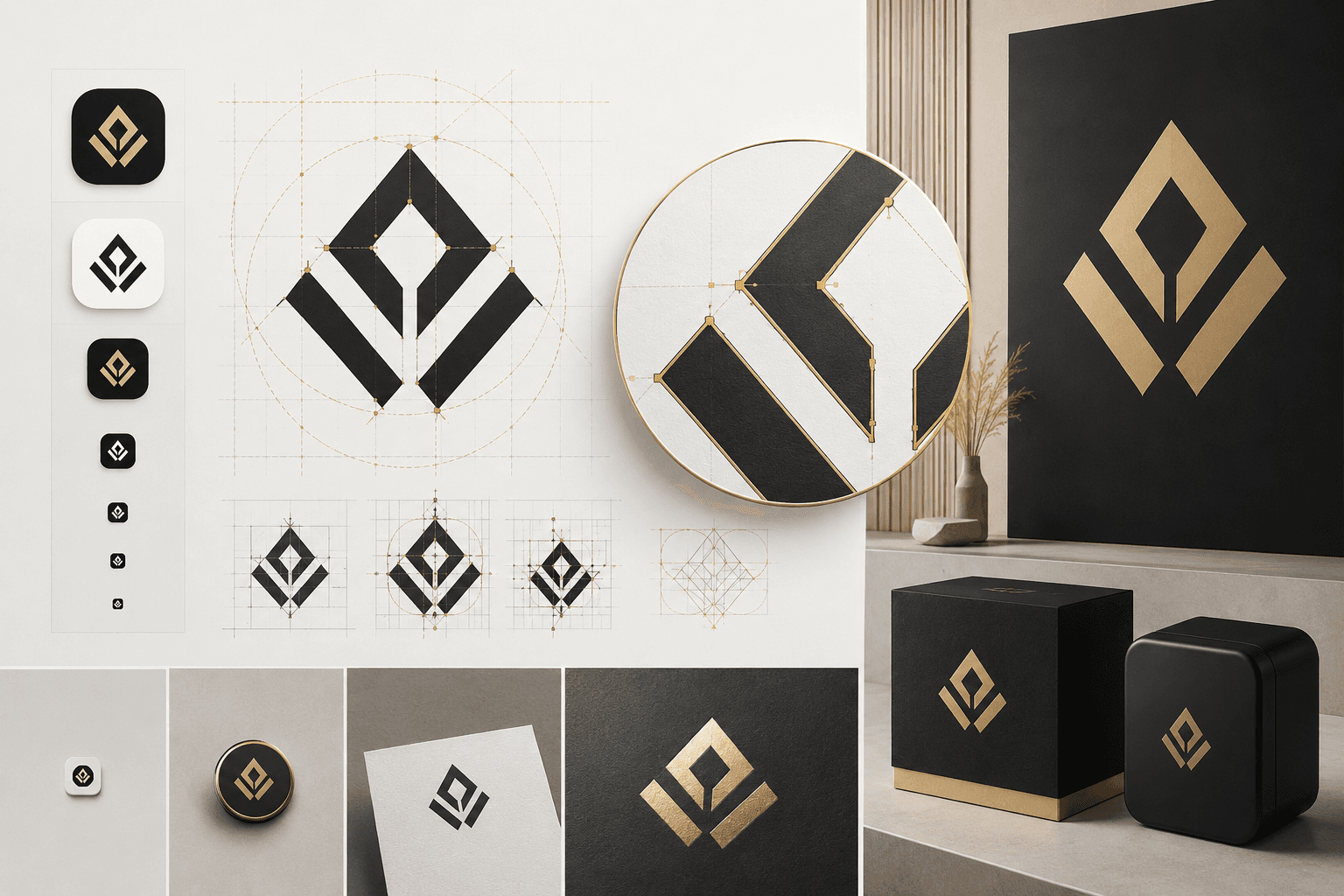
It appears across websites, social media profiles, business cards, packaging, ads, signage, and digital platforms. Because of this, a logo must remain clear and recognizable whether it is displayed very large or very small.
For businesses operating in Kuwait, logo clarity is essential for creating a professional and consistent brand presence. In Kuwaiti market, customers interact with brands across many platforms, which means a logo must perform well in every format and size.
This is why businesses invest in logo design strategies that create clear, scalable, and recognizable brand marks.
A strong logo should work everywhere.
What Scalable Logo Design Means
Scalable logo design means creating a logo that remains readable, recognizable, and visually balanced at different sizes.
A logo should work on:
- website headers
- social media profile pictures
- mobile screens
- app icons
- packaging
- business cards
- signage
- uniforms
- ads
- printed materials
The logo should not lose its shape, meaning, or clarity when resized.
Scalability is one of the most important signs of professional logo design.
Why Logo Clarity Matters
Logo clarity matters because users often see logos quickly and in different contexts.
A logo may appear for only a few seconds in a social media feed, on a small mobile screen, or beside competing brands. If it is too complex or unclear, it becomes harder to recognize.
Logo clarity helps businesses:
- improve recognition
- strengthen brand consistency
- build trust
- appear more professional
- improve visual communication
- support digital and print use
- create stronger memorability
- maintain brand quality
For businesses in Kuwait, a clear logo helps the brand remain recognizable across every customer touchpoint.
A logo that only works in one size is not flexible enough for modern branding.
Clear Logos vs Complicated Logos
Clear logos remain recognizable.
Complicated logos lose impact.
The difference is clear:
- clear logos work at small sizes
- complicated logos lose detail
- clear logos are easy to remember
- complicated logos can feel confusing
- clear logos support consistency
- complicated logos are harder to apply
- clear logos perform across platforms
- complicated logos may fail on mobile or print
- clear logos feel professional
- complicated logos can look unbalanced
A logo does not need to include everything about the business.
It needs to represent the brand clearly.
Why Some Logos Lose Clarity
Many logos lose clarity because they are designed with too much detail.
A logo may look good in a large presentation, but become unreadable when used as a small social media icon or mobile header.
Common problems include:
- thin lines
- too many details
- complex icons
- small text
- poor spacing
- weak contrast
- complicated shapes
- long taglines
- overused effects
- unclear typography
These issues reduce recognition.
A logo should be tested in real use cases before final approval.
How to Design Logos That Stay Clear at Every Size
A logo that works at every size requires simplicity, structure, and strong visual balance.
Keep the Design Simple
Simplicity helps logos stay recognizable.
A simple logo is easier to resize, remember, and apply across platforms.
Simple logo design can include:
- clean shapes
- limited details
- strong silhouettes
- balanced spacing
- clear typography
- minimal visual effects
Simplicity does not mean boring.
It means the logo is strong enough to communicate clearly.
Use Strong Typography
Typography plays a major role in logo clarity.
If the font is too thin, decorative, or compressed, it may become hard to read at smaller sizes.
Strong logo typography should be:
- readable
- balanced
- appropriate for the brand
- clear at small sizes
- consistent with the identity
- visually stable
This connects with brand identity systems that ensure logo clarity, consistency, and visual recognition.
Typography should support the logo, not weaken it.
Test the Logo at Small Sizes
A logo should always be tested at small sizes before being finalized.
This includes checking how it looks as:
- social media profile icon
- website favicon
- mobile header logo
- email signature logo
- app icon
- business card logo
If the logo becomes unclear at small sizes, it may need simplification.
Testing helps prevent real-world usage problems.
Create Logo Variations
Modern brands often need more than one logo format.
A full logo may work well on a website header, while a simplified icon may work better for social media or favicons.
Logo variations can include:
- primary logo
- secondary logo
- icon mark
- horizontal version
- vertical version
- monochrome version
- small-size version
- simplified version
Logo variations help the brand stay consistent across different formats.
They also improve flexibility.
Maintain Strong Contrast
Contrast helps a logo remain visible.
A logo should work clearly on light backgrounds, dark backgrounds, and brand colors.
Strong contrast can improve:
- readability
- visibility
- professional appearance
- accessibility
- recognition
- application quality
A logo should not disappear when placed on different backgrounds.
Contrast testing is essential for strong brand application.
Responsive Logo Design
Responsive logo design means adapting a logo for different screen sizes and contexts.
Just like websites adjust across devices, logos often need flexible versions for different uses.
A responsive logo system may include:
- full logo for large spaces
- simplified logo for medium spaces
- icon mark for small spaces
- monochrome logo for limited color use
- favicon version for browser tabs
Responsive logo design helps brands stay clear across digital environments.
It makes the identity more practical and scalable.
Logo Design and Digital Platforms
Digital platforms place logos in many different sizes.
A logo may appear large on a website, small in a mobile menu, cropped inside a profile circle, or tiny in a browser tab.
Digital logo design should consider:
- profile picture crops
- mobile responsiveness
- browser favicons
- email signatures
- social media thumbnails
- app icons
- website navigation
- ad placements
A logo designed only for large use may fail digitally.
Modern logos must be designed for digital visibility from the start.
Logo Design and Print Use
Logos also need to work in print.
Printed materials can include business cards, brochures, packaging, uniforms, signage, labels, and stationery.
Print-ready logos should work in:
- full color
- black and white
- small print
- large signage
- embroidery
- packaging
- textured materials
- single color applications
This is why professional logo files and variations matter.
A logo should remain clear whether it is printed small or displayed large.
Logo Spacing and Proportions
Spacing affects how clear a logo feels.
If elements are too close together, the logo may look crowded. If spacing is inconsistent, the logo may feel unbalanced.
Strong logo spacing includes:
- balanced icon and text placement
- clear negative space
- readable letter spacing
- consistent proportions
- enough breathing room
- proper clear space around the logo
Good spacing helps the logo feel more professional.
It also improves readability at smaller sizes.
Logo Color and Size
Color can affect logo clarity.
Some colors may look strong at large sizes but weak at smaller sizes or on certain backgrounds.
A good logo should work in:
- full color
- black
- white
- grayscale
- single color
- reversed format
If a logo only works in one color version, it may be difficult to apply consistently.
A strong logo should not depend only on color to be recognizable.
Common Logo Design Mistakes
Many logos fail because they are not tested across real applications.
Common mistakes include:
- adding too many elements
- using unreadable fonts
- relying on thin lines
- including long taglines
- ignoring small-size use
- using weak contrast
- creating only one logo format
- not preparing monochrome versions
- ignoring mobile visibility
- designing only for presentation mockups
These mistakes create problems later.
A logo should be designed for real brand use, not only for approval screens.
When Businesses Should Redesign a Logo
Businesses should review their logo when it no longer works clearly across modern platforms.
This is especially important when:
- the logo is hard to read at small sizes
- the brand is expanding in Kuwait
- the website is being redesigned
- social media visibility is weak
- printed materials look inconsistent
- the logo feels outdated
- the business is rebranding
- the logo does not support digital use
- the logo has too many details
A logo redesign does not always mean changing everything.
Sometimes it means simplifying, refining, or creating better variations.
Strategic Reality Behind Logo Clarity
Logo clarity is not only a design detail.
It affects recognition, consistency, and trust.
A strong logo should answer:
- is it readable at small sizes?
- is it recognizable without extra details?
- does it work in black and white?
- does it work on mobile?
- does it fit social media formats?
- does it support print use?
- does it reflect the brand identity?
- can it scale with the business?
A logo should be simple enough to adapt and strong enough to remember.
Clarity makes a logo more useful.
Real World Application
A business in Kuwait designing a scalable logo can create a stronger and more consistent brand presence.
A scalable logo can help the business:
- improve brand recognition
- maintain consistency
- look professional across platforms
- improve social media visibility
- support print and digital use
- strengthen customer trust
- reduce design application problems
- build a stronger visual identity
For example, a business can create a primary logo for full use, an icon mark for small spaces, and a monochrome version for flexible applications.
This makes the logo easier to use across every brand touchpoint.
Logo Design and Brand Growth
Businesses scaling in Kuwait, including Kuwait City, Al Ahmadi, Salmiya, Hawalli and beyond, benefit from logos that can adapt across platforms, campaigns, and markets.
As a brand grows, the logo appears in more places. It must remain clear, consistent, and recognizable everywhere.
Scalable logo design supports growth by helping businesses create:
- stronger brand recognition
- better visual consistency
- clearer digital presence
- more professional printed materials
- flexible brand applications
- stronger identity systems
- better long-term usability
- improved customer trust
Growth requires a logo that can travel across every medium.
A scalable logo gives the brand that flexibility.
Expert Perspective from The iBoost
At The iBoost, we design logos that are built for clarity, recognition, and long-term brand use.
We focus on creating visual marks that work across digital platforms, print materials, social media, packaging, and future brand applications.
Through logo design strategies that create clear, scalable, and recognizable brand marks, we help businesses build stronger visual identities across Kuwait.
Designing logos that stay clear at every size means building for real-world use.
For businesses in Kuwait, investing in scalable logo design can improve recognition, consistency, and long-term brand value.
Frequently Asked Questions
A logo should stay clear at every size because it appears across many platforms, from small social media icons to large signage, and must remain recognizable everywhere.
A scalable logo uses simple shapes, readable typography, strong spacing, clear contrast, and flexible variations that work across different sizes and formats.
Logos become unclear when they include too many details, thin lines, small text, weak contrast, poor spacing, or complex shapes.
Logo variations are different versions of a logo, such as primary, secondary, icon, horizontal, vertical, monochrome, and small-size versions.
A business should consider redesigning its logo when it is hard to read, outdated, inconsistent, difficult to use digitally, or unclear at small sizes.