| Amman, Jordan - Jul 20, 2026
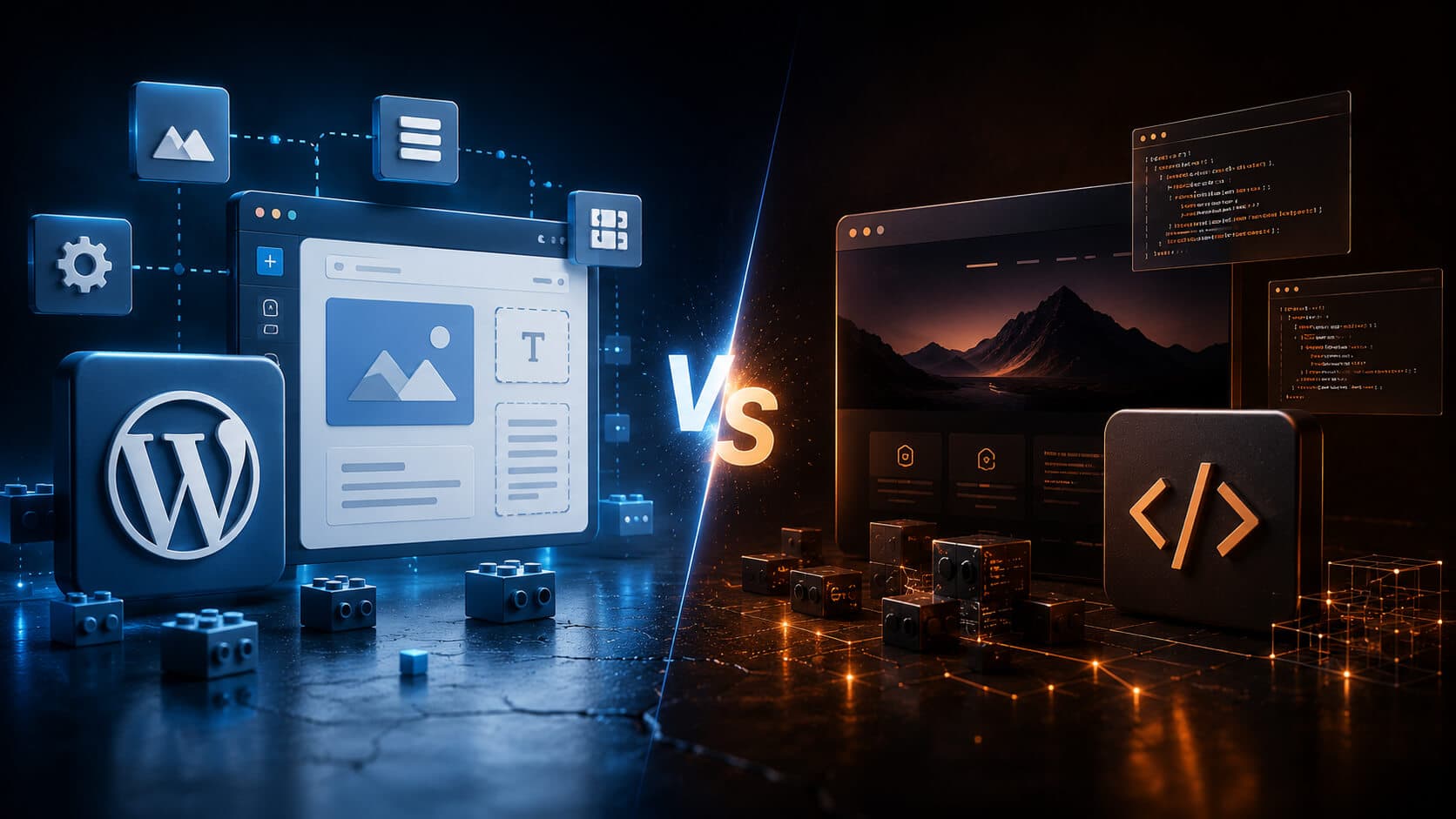
WordPress vs Custom Website Development in Amman, Jordan
Choosing between WordPress and custom development is not a contest between a good platform and a bad one. Both can produce excellent websites when the choice matches the business problem.
WordPress offers a mature content ecosystem and faster standard implementation. Custom development offers deeper control when workflows, integrations, performance, or product behavior cannot be expressed cleanly through an existing platform.
The expensive mistake is choosing from preference alone and discovering later that the website is difficult to operate, extend, secure, or rebuild.
Why This Matters to Businesses Today
Strong results rarely come from one decision or one tool. They come from the connection between strategy, execution, measurement, and customer experience. In markets across Jordan and the wider GCC, that connection matters even more because buyers can quickly compare local, regional, and international options.
Website development planned around business requirements and growth helps businesses move from assumptions to decisions grounded in real behavior and clear data. The objective is not simply to create more activity, but to improve the quality of outcomes and connect every action to a commercial goal.
Start with Requirements, Not Technology
Document users, content, workflows, integrations, permissions, markets, languages, and expected traffic before naming a platform.
A brochure website and a customer portal may look similar on a sitemap but require entirely different architecture and operational ownership.
Questions for discovery
- Who updates content?
- Which systems exchange data?
- What must be unique?
- How fast will requirements change?
These signals should not be read in isolation. Their real meaning appears when they are compared with the goal, the audience, the customer’s stage in the journey, and the change observed over time.
Compare Speed and Initial Cost
WordPress can reduce initial time and cost when themes, blocks, plugins, and editorial workflows cover the requirement without heavy customization.
Custom development usually requires more discovery and engineering but can avoid the accumulated compromises of forcing unusual behavior through multiple plugins.
Cost categories
- Discovery and design
- Development and testing
- Licenses and hosting
- Content migration
- Training and support
These signals should not be read in isolation. Their real meaning appears when they are compared with the goal, the audience, the customer’s stage in the journey, and the change observed over time.
Evaluate Flexibility and Integrations
WordPress is flexible within its ecosystem and can integrate with many common tools. Complexity rises when plugins overlap, data models become unnatural, or critical logic depends on third parties.
Custom systems can model the business directly and expose purpose-built APIs, but every custom capability needs documentation, testing, maintenance, and skilled ownership.
Integration considerations
- CRM and marketing tools
- Payments and ecommerce
- Authentication and roles
- ERP or inventory data
- Multilingual content
These signals should not be read in isolation. Their real meaning appears when they are compared with the goal, the audience, the customer’s stage in the journey, and the change observed over time.
Plan Security, Performance, and Maintenance
Neither option is secure or fast automatically. Outcomes depend on architecture, code quality, hosting, updates, access control, monitoring, caching, media, and third-party choices.
Ask who owns updates, incident response, backups, regression testing, and future development after launch. Total cost of ownership matters more than launch cost alone.
Operational responsibilities
- Security updates
- Performance monitoring
- Backups and recovery
- Dependency review
- Release testing
These signals should not be read in isolation. Their real meaning appears when they are compared with the goal, the audience, the customer’s stage in the journey, and the change observed over time.
Common Mistakes to Avoid
- Choosing by trend or developer preference
- Comparing only launch prices
- Installing plugins without governance
- Underestimating content migration
- Launching without a maintenance owner
A good response starts by defining the problem accurately before proposing a solution. Changing a platform, increasing budget, or adding more content may solve nothing when the real issue sits in measurement, messaging, experience, or audience targeting.
A Practical Decision Framework
- Define one commercial objective that can be measured clearly.
- Validate data and tracking quality before interpreting performance.
- Segment results by market, device, channel, and user intent.
- Identify the largest point of friction or leakage in the customer journey.
- Test one meaningful change at a time.
- Compare the result with a baseline and an appropriate time period.
- Document what the team learned and turn it into a repeatable process.
Expert Perspective from The iBoost
At The iBoost, we treat marketing, design, development, and measurement as one connected system. A strong channel cannot compensate for a weak experience, a good website cannot reach its potential without relevant traffic, and data creates little value until it informs a decision.
We help businesses in Jordan diagnose what is limiting growth, prioritize the right improvements, and build solutions around customer behavior and market reality. The work starts with clarity and ends with a system that can be measured and improved continuously.
Frequently Asked Questions
Start with business goals, user needs, current data, operational constraints, and the cost of maintaining each realistic option.
No. The right choice depends on scale, complexity, team capability, budget, integration needs, and growth plans.
Monitor qualified outcomes, conversion efficiency, customer value, operating cost, reliability, and the trend over a meaningful period.
Review it when customer behavior, costs, platform capabilities, market conditions, or business priorities change materially.
The iBoost connects strategy, implementation, experience, and measurement to recommend and build the option that best supports the business.