Top Web Design Trends for 2025: What’s In and What’s Out across GCC, Middle East & Global Markets
GCC · MIDDLE EAST · GLOBAL
| Jan 22, 2025
Web design is constantly evolving.
User behavior, technology, and digital expectations continue to change, which means websites must evolve with them. What once looked modern can quickly feel outdated, and businesses that fail to adapt risk losing engagement, credibility, and conversions.
For businesses operating across international markets, staying aligned with relevant web design trends is essential for maintaining competitiveness and delivering strong user experiences. A modern website should not only look good. It should load quickly, guide users clearly, work smoothly on mobile, and support business goals.
This is why companies invest in website development strategies that align design, performance, and user expectations.
Understanding what is changing and why it matters helps businesses make smarter design decisions.
Web design trends reflect how users interact with digital platforms and what they expect from modern websites.
They are influenced by changes in user behavior, technology, performance standards, accessibility needs, and design innovation.
Web design trends are shaped by:
A trend is not valuable simply because it looks modern.
It becomes valuable when it improves usability, communication, performance, or conversion.
Web design trends matter because users judge websites quickly.
If a website feels outdated, slow, cluttered, or difficult to use, users may leave before exploring the business. On the other hand, a modern and well-structured website can build trust, improve engagement, and guide users toward action.
Following relevant trends helps:
For businesses across international markets, web design trends should be treated strategically.
The goal is not to follow every trend.
The goal is to apply the trends that support users and business growth.
Modern web design focuses on usability, clarity, performance, and user flow.
Outdated design often focuses on appearance without enough attention to functionality.
Modern websites prioritize performance.
Outdated websites create friction.
A modern website helps users understand the business quickly, find what they need, and take action easily. An outdated website may look busy, load slowly, or make users work too hard to navigate.
The difference is clear:
Strong design is not only about looking current.
It is about helping users move confidently through the experience.
The strongest web design trends for 2025 focus on clarity, speed, usability, and interaction quality.
These trends reflect the way users now behave online: they scan quickly, expect fast loading, browse from mobile, and respond to clear, focused experiences.
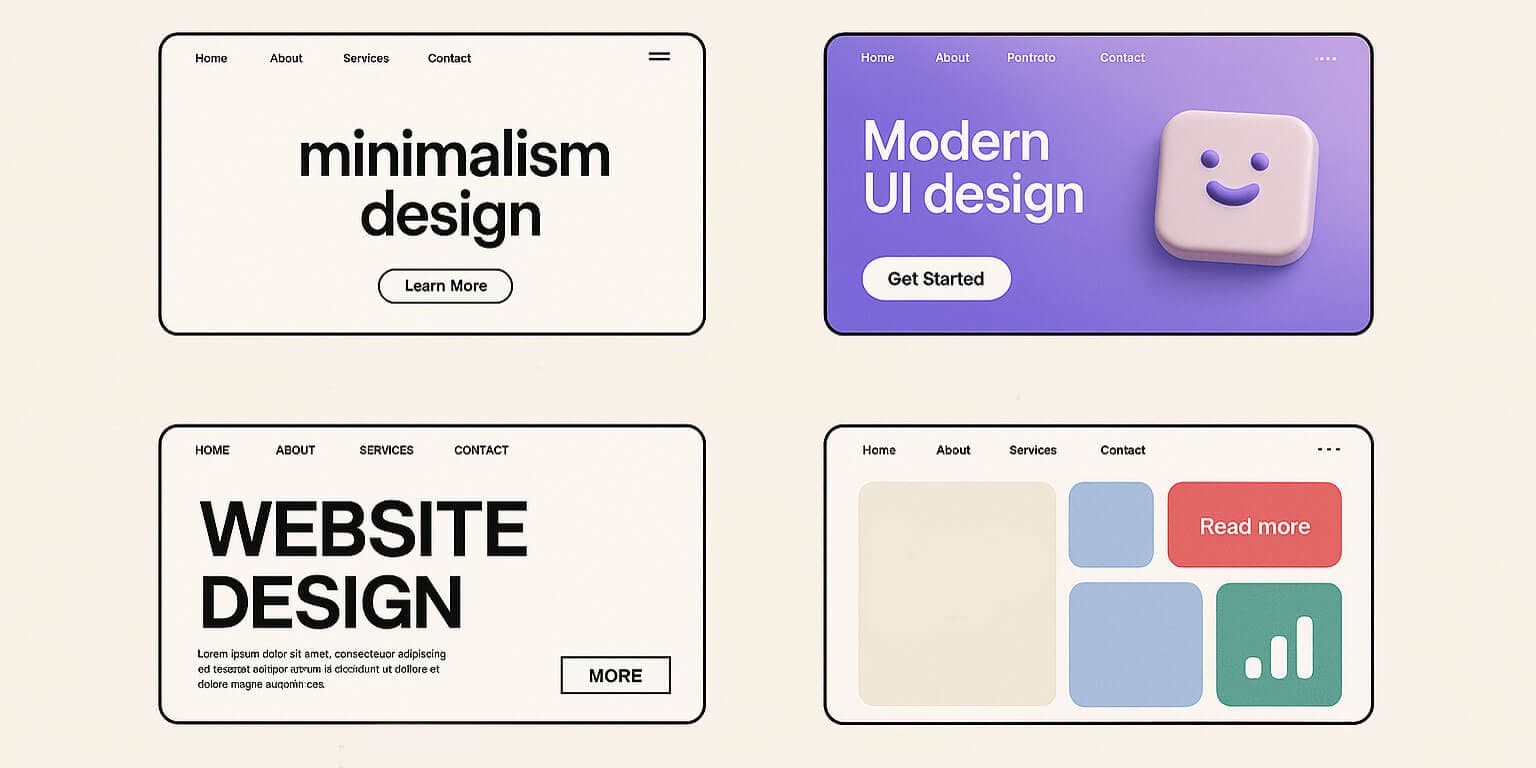
Minimal and clean layouts continue to be important because they improve focus.
Users do not want to work through crowded pages, excessive sections, or unnecessary visual noise. Clean layouts make information easier to scan and help users understand what matters most.
Minimal design can improve:
Minimal does not mean empty.
It means every element has a purpose.
Micro interactions are small animations or responses that happen when users interact with a website.
They can appear when users hover over a button, submit a form, scroll through a section, open a menu, or complete an action.
Micro interactions help make websites feel more responsive and engaging.
They can improve:
When used correctly, micro interactions make the experience feel smoother without distracting the user.
Mobile first design is essential in 2025.
Many users browse websites from mobile devices, so the mobile experience must be planned from the beginning. A website should not simply be a desktop design that has been adjusted for smaller screens.
Mobile first design improves:
For businesses across international markets, mobile first design is especially important because users expect websites to work smoothly on every device.
Dark mode options are becoming more common because they can improve user comfort and accessibility.
Some users prefer darker interfaces, especially in low-light environments. Dark mode can also help certain brands create a more premium, modern, or immersive visual style.
Dark mode can support:
However, dark mode must be designed carefully.
Poor contrast or weak readability can reduce usability.
Performance driven design is one of the most important trends.
A beautiful website is not enough if it loads slowly or feels heavy. Users expect fast and smooth experiences.
Performance driven design focuses on:
This aligns with website design approaches that create modern, responsive, and user friendly digital experiences.
Performance affects engagement, SEO, and conversions.
In 2025, speed is part of design.
Some web design practices are becoming less effective because they create friction, slow performance, or fail to match user expectations.
Overloaded layouts are out.
Too many sections, images, animations, buttons, and messages can overwhelm users. When everything competes for attention, users may not know what to focus on.
Clean and structured layouts are more effective because they guide users clearly.
Slow or excessive animations can hurt user experience.
Animations should support interaction and storytelling, not delay the user. If animations slow down page loading or make the website feel heavy, they reduce performance.
Modern animation should be subtle, fast, and purposeful.
Complex navigation is no longer effective.
Users want to find information quickly. If menus are confusing, too deep, or overloaded with options, users may leave.
Navigation should be simple, clear, and easy to use on both desktop and mobile.
Desktop-first design is becoming less effective.
A website that is designed for desktop first and then forced into mobile can create usability problems. Mobile users need clear layouts, readable text, easy buttons, and fast loading.
Mobile first design is now the stronger approach.
Generic templates are out because they make brands look similar.
Template-based websites can work for simple needs, but businesses that want stronger positioning, better conversion, and a more distinctive digital presence often need a more strategic design approach.
A website should reflect the brand, not look like everyone else.
Many businesses fall behind because they treat web design as a one-time project.
They launch a website and leave it unchanged for years, even as user expectations, technology, and competition continue to evolve.
Common reasons businesses fall behind include:
These issues make the website feel outdated and less effective over time.
A website should evolve with the business and its users.
Applying web design trends effectively requires strategy.
Not every trend fits every business. A trend should only be used if it supports the user journey, brand identity, performance, or conversion goals.
Design must support usability.
Every section, button, animation, and layout should help users understand the website and move toward action.
Good user experience depends on:
A trend is useful only if it improves the experience.
Visuals should not slow down the website.
Large images, heavy videos, complex animations, and unnecessary scripts can make a website feel slow. Strong design should look good while remaining efficient.
A performance-focused website helps users stay engaged and supports stronger SEO results.
Every design element should have a function.
A visual effect should guide attention. A section should support understanding. A CTA should drive action. An animation should improve interaction.
Design without purpose creates clutter.
Purposeful design creates clarity.
Not all trends are suitable for every business.
A luxury brand, corporate brand, e-commerce website, educational platform, and creative agency may all need different design approaches.
Trends should be adapted based on:
This connects with user experience design that improves usability, interaction, and engagement across digital platforms.
The best websites do not follow trends blindly.
They use trends to support strategy.
Businesses should update their website when the current experience no longer supports user expectations or business goals.
This is especially important when:
An outdated website can weaken trust and reduce performance.
A strategic redesign can improve perception, usability, and conversions.
Web design trends are not about aesthetics alone.
They reflect deeper changes in user expectations.
Users expect websites to be faster, clearer, more mobile friendly, and easier to use. They also expect brands to look credible, modern, and consistent across digital touchpoints.
Businesses that adapt strategically gain a competitive edge.
Trends should not be followed because they are popular.
They should be used because they solve user problems and support business goals.
A business across international markets adopting modern design principles can create a stronger digital experience.
By using clean layouts, mobile first design, micro interactions, clear navigation, and performance driven development, the business can make its website easier to use and more effective.
Modern web design can help a business:
A modern website helps users trust the business faster.
Businesses scaling across international markets, including the GCC, Middle East, Europe and beyond, benefit from modern, optimized digital platforms.
As a business grows, its website needs to support more services, pages, content, campaigns, forms, and user journeys. A modern design system helps the website remain clear, scalable, and effective.
Web design trends support growth when they improve:
A website should grow with the business.
Modern design helps make that possible.
At The iBoost, we design websites that combine modern trends with performance, usability, and strategy.
We focus on creating digital experiences that look current, load quickly, guide users clearly, and support business goals. Every design decision should improve the user journey and strengthen the brand’s digital presence.
Through website development strategies that align design, performance, and user expectations, we help businesses stay competitive across international markets.
Web design trends are constantly evolving, but the focus remains the same: usability, performance, and clarity.
For businesses across international markets, adapting strategically can improve engagement, strengthen credibility, and support long-term growth.
Web design trends matter because they reflect changing user expectations, technology, and digital behavior. Relevant trends can improve user experience, engagement, credibility, and conversion rates.
Important web design trends for 2025 include minimal layouts, micro interactions, mobile first design, dark mode options, and performance driven design.
Overloaded layouts, slow animations, complex navigation, desktop-first design, and generic templates are becoming less effective because they create friction and reduce engagement.
No. Businesses should only apply trends that support their audience, brand identity, user experience, performance, and conversion goals.
A business should update its website when engagement is declining, design feels outdated, performance is poor, mobile experience is weak, conversion rates are low, or the business is expanding.