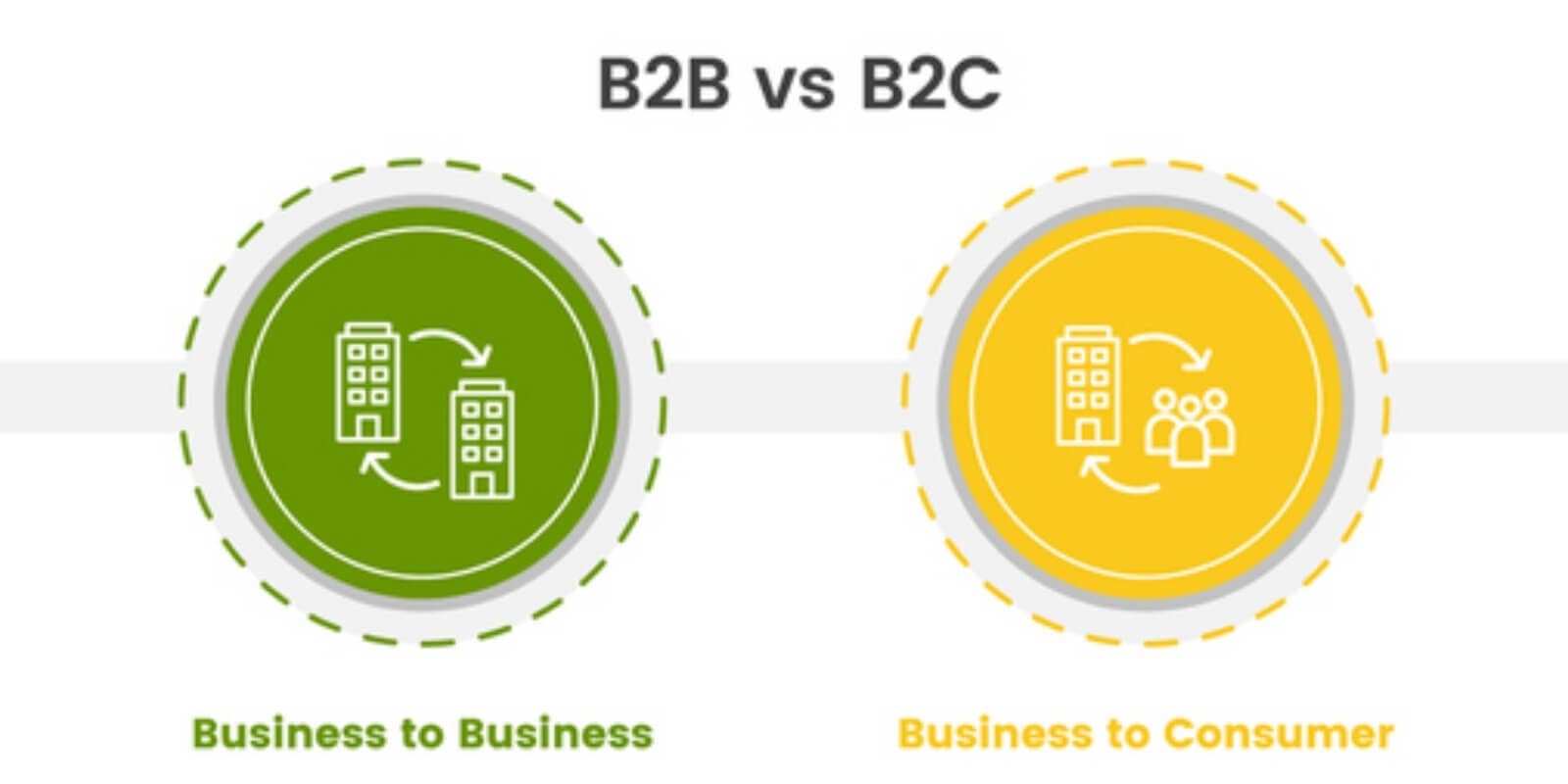
The Difference Between B2B and B2C Marketing across GCC, Middle East & Global Markets
GCC · MIDDLE EAST · GLOBAL
| Jul 27, 2024
Marketing strategies differ significantly depending on the audience.
A business selling to other businesses needs a different approach than a brand selling directly to individual consumers. The message, decision process, buying motivation, content style, and conversion path are not the same.
For companies operating across international markets, understanding the difference between B2B and B2C marketing is essential for building effective campaigns. When the audience is misunderstood, campaigns can feel disconnected, messaging becomes weak, and budgets may be used inefficiently.
This is why organizations rely on digital marketing strategies that align messaging, targeting, and conversion approaches with audience behavior.
The audience defines the strategy.
B2B marketing, or business-to-business marketing, focuses on selling products or services to other businesses.
The audience is usually made up of business owners, managers, executives, procurement teams, department heads, or decision makers.
B2B marketing often involves:
In B2B marketing, customers usually need to justify the decision. They compare providers, review benefits, evaluate risk, and consider how the solution supports business goals.
The buying process is more structured.
B2C marketing, or business-to-consumer marketing, focuses on selling directly to individual consumers.
The audience is usually made up of people buying for personal use, lifestyle needs, preferences, emotions, convenience, or immediate value.
B2C marketing often involves:
In B2C marketing, decisions are often faster and more emotionally driven.
Consumers may buy because something feels useful, desirable, affordable, exciting, convenient, or aligned with their lifestyle.
B2B and B2C marketing both aim to drive action, but they do not work the same way.
B2B is relationship driven.
B2C is emotion driven.
B2B focuses on value.
B2C focuses on experience.
B2B involves longer cycles.
B2C is faster.
The difference is clear:
Both approaches are important across international markets.
The right strategy depends on the audience and the goal.
Audience type matters because it shapes every marketing decision.
A B2B audience usually wants clarity, credibility, expertise, and measurable value. A B2C audience often wants ease, relevance, emotion, and immediate benefit.
This affects:
A campaign that works for consumers may not work for business decision makers.
A campaign that works for businesses may feel too detailed or slow for consumers.
Marketing must match the way the audience thinks and decides.
Many businesses struggle because they apply the wrong approach to the wrong audience.
A company targeting businesses may use overly emotional consumer-style messaging without enough proof or value. A consumer brand may use overly complex messaging when the audience needs something simple and engaging.
Common mistakes include:
These mistakes reduce campaign performance across international markets.
Strong marketing begins with audience understanding.
B2B marketing is built around trust, value, and long-term relationships.
Businesses usually do not make decisions instantly. They need information, proof, confidence, and internal alignment before choosing a provider.
Effective B2B marketing should focus on:
B2B content should help decision makers understand why the service or product matters and how it supports business goals.
B2C marketing is built around attention, emotion, and direct response.
Consumers often make decisions faster, especially when the offer is clear, visually appealing, and easy to act on.
Effective B2C marketing should focus on:
B2C content should make the decision feel easy, desirable, and relevant.
Marketing should be adapted based on how the audience thinks, evaluates, and takes action.
B2B marketing should focus on value, trust, and long-term credibility.
Businesses should:
The message should help decision makers feel confident.
B2B audiences need clarity and proof.
B2C marketing should focus on emotion, simplicity, and engagement.
Businesses should:
The message should connect quickly.
B2C audiences need relevance and motivation.
This aligns with social media marketing strategies that tailor content and messaging for different audiences.
B2B content should educate, build trust, and support decision making.
Useful B2B content includes:
The goal is to show expertise and help the audience make an informed decision.
B2B content should not be overly promotional.
It should provide value before asking for action.
B2C content should capture attention quickly and create interest.
Useful B2C content includes:
The goal is to make the audience feel connected and motivated to act.
B2C content should be clear, engaging, and easy to understand.
Platform selection is also different between B2B and B2C.
B2B marketing often performs well on platforms where professional audiences are active, such as LinkedIn, search engines, email, webinars, and industry websites.
B2C marketing often performs well on platforms where consumers discover, browse, and engage with lifestyle content, such as Instagram, Facebook, TikTok, YouTube, and e-commerce channels.
However, platform choice should always depend on audience behavior.
The question is not only where the brand wants to appear.
The question is where the audience is active and ready to engage.
The conversion path is usually different for each audience.
In B2B marketing, conversion may involve:
In B2C marketing, conversion may involve:
B2B conversions often require nurturing.
B2C conversions often require speed and simplicity.
Businesses should adjust their marketing strategy when their audience, market, or goals change.
This is especially important when:
A strategy that worked for one audience may not work for another.
Marketing should evolve with the audience.
Different audiences require different communication strategies.
B2B marketing needs credibility, logic, and relationship building.
B2C marketing needs emotion, clarity, and direct engagement.
The strongest strategies are built around how the audience actually makes decisions.
A clear strategy should answer:
When the strategy matches the audience, marketing becomes more effective.
A business across international markets that aligns strategy with audience type can improve campaign performance.
Audience-aligned marketing can help businesses:
For example, a B2B service company should focus on expertise, proof, and lead nurturing. A B2C retail brand should focus on emotion, visual appeal, and easy purchase paths.
Both can grow, but they need different strategies.
Businesses scaling across international markets, including the GCC, Middle East, Europe and beyond, benefit from tailored marketing approaches.
As businesses grow, they may serve different audience segments. Some may target companies, while others target individual customers. Some may even need both B2B and B2C strategies.
Tailored marketing helps businesses maintain:
Growth becomes easier when marketing is built around the audience.
At The iBoost, we design marketing strategies based on audience behavior, business goals, and platform performance.
We help businesses understand whether they need a B2B, B2C, or mixed approach, then build messaging, targeting, and campaign structures around that audience.
Through digital marketing strategies that align messaging, targeting, and conversion approaches with audience behavior, we help businesses perform effectively across international markets.
B2B and B2C marketing require different approaches.
For businesses across international markets, understanding these differences allows campaigns to become more relevant, more efficient, and more effective.
B2B marketing targets other businesses, while B2C marketing targets individual consumers. B2B usually involves longer decision cycles and logical evaluation, while B2C often involves faster and more emotional decisions.
Audience type matters because it affects messaging, targeting, content style, platform choice, sales process, and conversion strategy.
B2B marketing works best when it focuses on value, trust, expertise, relationships, detailed information, case studies, and long-term credibility.
B2C marketing works best when it focuses on emotion, simplicity, strong visuals, direct messaging, personal benefits, and easy actions.
A business should adjust its marketing strategy when entering new markets, changing target audience, expanding offerings, improving campaign performance, or shifting between B2B and B2C audiences.