How Typography Shapes Perceptions of Your Brand across GCC, Middle East & Global Markets
GCC · MIDDLE EAST · GLOBAL
| Sep 05, 2025
Typography is often underestimated, yet it is one of the most powerful elements in shaping how a brand is perceived.
Before users read a full message, they react to how the text looks. The font, spacing, weight, size, structure, and layout all influence how the brand feels. Typography can make a brand feel premium, modern, trustworthy, bold, elegant, approachable, or outdated.
For businesses operating across international markets, where competition is high and first impressions matter, typography plays a strategic role in branding. It affects how people experience the brand across websites, social media, advertising, packaging, presentations, and digital platforms.
This is why companies invest in brand identity systems that ensure consistency and strong visual communication to control how their brand is perceived.
Typography is not just design.
It is communication.
Typography in branding refers to the style, structure, and presentation of text within a brand’s visual identity.
It includes font selection, size, spacing, alignment, hierarchy, readability, and how text appears across different brand materials.
Typography influences how people read a message, but it also influences how they feel about it.
Typography includes:
A strong typography system helps the brand communicate clearly and consistently.
It turns written content into a recognizable part of the brand identity.
Typography matters because people form impressions quickly.
A brand may have strong messaging, but if the typography feels weak, inconsistent, or difficult to read, the message loses impact. The audience may not fully understand why the brand feels less professional, but they can feel it.
Typography impacts:
In competitive environments across international markets, these factors directly influence how users evaluate a brand within seconds.
Typography helps answer an important question:
Does this brand feel credible?
First impressions are often visual before they are verbal.
When users land on a website, open a brochure, view a social post, or see an ad, typography influences how they interpret the brand immediately.
A refined typography system can make a brand feel established and professional.
A messy typography system can make a brand feel careless or inconsistent.
Even before the audience reads the words, typography communicates:
This is why typography should never be treated as a minor design choice.
It is one of the first signals users receive.
Typography is part of visual design, but it has a specific role.
Typography focuses on how text is presented.
Visual design includes the full system of colors, imagery, layout, icons, spacing, shapes, and composition.
Typography shapes tone and clarity.
Design shapes the overall experience.
Strong brands align both elements strategically.
A brand with strong visuals but weak typography can still feel incomplete. A brand with beautiful fonts but poor layout can still feel difficult to read. The strongest identity systems make typography and visual design work together.
Many brands struggle with typography because they choose fonts based only on appearance.
A font may look attractive on its own, but it may not match the brand personality, work well across platforms, or remain readable at different sizes.
Common typography mistakes include:
These mistakes create confusion and weaken perception.
Typography should not be chosen randomly. It should support the brand’s positioning, audience, and communication style.
Typography affects how people feel about a brand before they consciously analyze it.
A luxury brand may use refined, spacious typography to feel premium. A technology brand may use clean, modern typography to feel efficient. A youth brand may use bold or expressive typography to feel energetic.
Typography shapes perception through several key factors.
Clean and structured typography communicates reliability.
When fonts are used consistently, spacing is controlled, and hierarchy is clear, the brand feels more organized and credible.
Professional typography helps users feel that the business pays attention to detail.
This is especially important for service businesses, corporate brands, financial companies, healthcare brands, education providers, and premium products.
If typography feels careless, the brand may feel careless too.
Clear typography improves understanding.
Users should not work hard to read a message. If text is too small, too crowded, poorly spaced, or visually confusing, the communication becomes harder to process.
Good typography reduces friction.
It helps users move through information quickly and comfortably.
Simplicity in typography supports:
A simple typography system does not mean a boring one. It means the text is easy to understand and visually controlled.
Typography gives a brand personality.
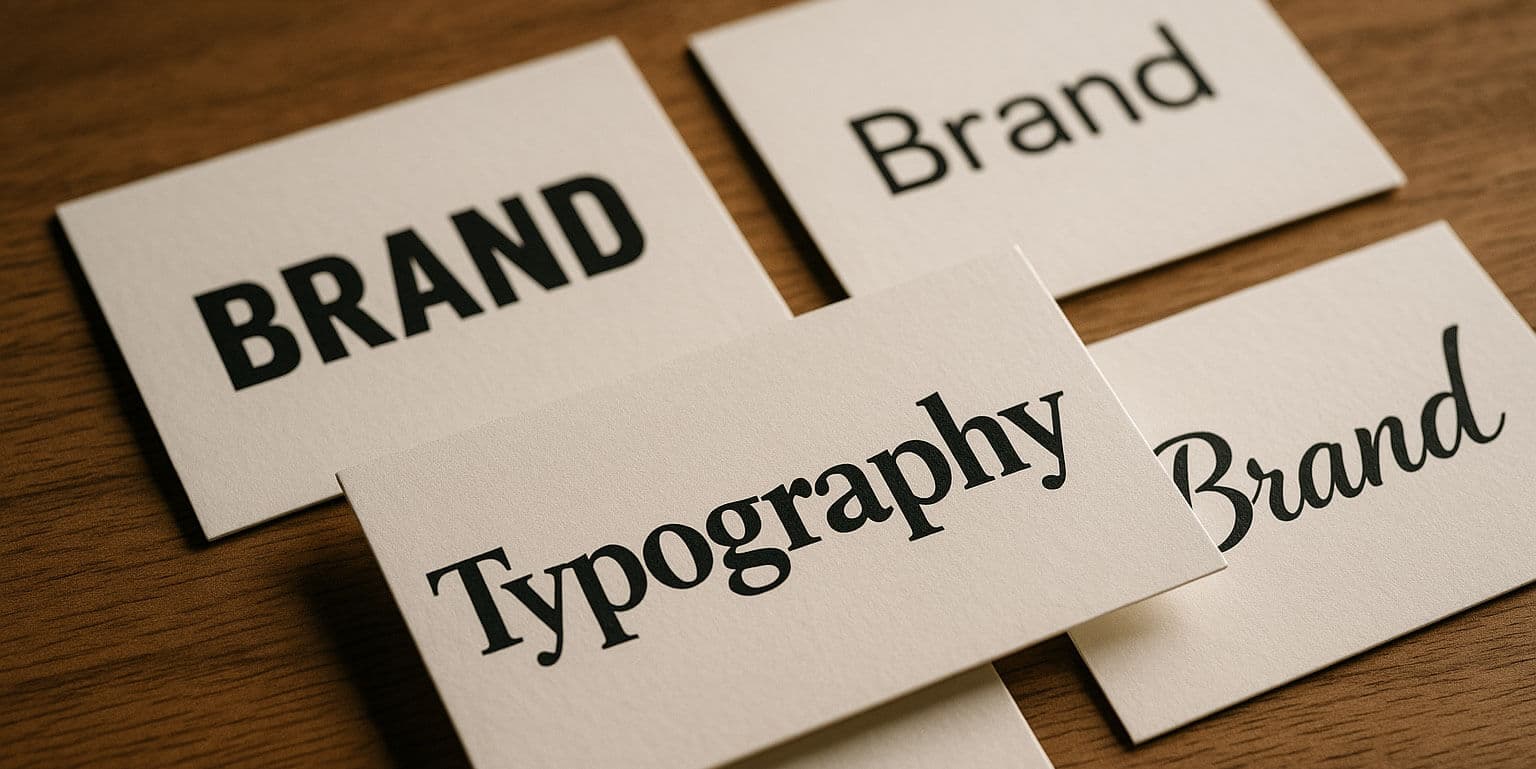
Different typefaces create different emotional signals. A serif font may feel classic, editorial, or premium. A sans serif font may feel modern, clean, or minimal. A bold condensed font may feel strong and direct. A rounded font may feel friendly and approachable.
Typography can make a brand feel:
The right typography should match the brand’s voice and positioning.
A mismatch can create confusion.
Consistent typography strengthens recognition and trust.
When a brand uses the same typography system across its website, social media, ads, presentations, and printed materials, it becomes easier to recognize.
Consistency does not mean every layout must look identical. It means the brand follows the same typographic logic everywhere.
This requires logo design and visual systems that define brand identity and ensure consistency across all brand assets.
Typography becomes a brand signature when it is used consistently.
Typography is a core part of brand identity.
It works alongside the logo, colors, imagery, layout system, and tone of voice to create a complete brand experience.
A strong typography system helps define:
For businesses across international markets, typography can help build a clearer and stronger presence across digital and offline touchpoints.
The brand does not only need to look good.
It needs to feel consistent.
Typography is especially important in digital environments.
Users read websites, mobile pages, landing pages, emails, forms, captions, and product details on different screen sizes. If typography is not designed for digital use, the user experience suffers.
Good digital typography should be:
Typography affects how long users stay, how easily they understand content, and whether they continue toward action.
A beautiful font is not enough.
It must work in real digital conditions.
On websites, typography guides the user journey.
Headlines tell users what matters first. Subheadings organize sections. Body text explains details. Buttons guide action. Labels support navigation and forms.
A strong website typography system improves:
Poor typography can make a website feel difficult, even if the content is strong.
Users should be able to scan a page quickly and understand what to do next.
Typography makes that possible.
Social media content depends heavily on fast recognition.
Users scroll quickly, and the brand has only seconds to capture attention. Consistent typography can help people recognize the brand even before reading the account name.
Strong social media typography helps with:
For brands publishing frequently, typography becomes even more important because it creates a repeated visual pattern.
That repetition builds memory.
Typography should be documented inside brand guidelines.
Without clear rules, teams may use different fonts, sizes, styles, spacing, and layouts across platforms. This weakens consistency and makes the brand harder to manage.
Typography guidelines may include:
Clear typography rules help designers, marketers, developers, and content teams work from the same system.
This protects the brand as it grows.
Businesses should revisit typography when the brand needs stronger clarity, consistency, or perception.
This often happens during moments of growth, redesign, or strategic change.
Businesses should refine typography when:
These moments often reveal gaps in visual consistency.
If a brand feels unclear or inconsistent, typography may be part of the problem.
Typography can weaken a brand when it is not handled carefully.
Common mistakes include:
These mistakes can make the brand feel less professional and harder to understand.
Good typography should feel effortless to the audience.
It should support the message, not compete with it.
Typography is not a secondary design element.
It is a core part of brand communication.
Users form impressions instantly. Typography influences whether a brand feels trustworthy, premium, modern, traditional, bold, or outdated.
Brands that ignore typography often struggle with perception without understanding why.
A typography system should be chosen and applied strategically. It should reflect the brand’s position, audience, personality, and communication needs.
Typography does not only show words.
It shapes how those words are received.
Businesses scaling across international markets, including the GCC, Middle East, Europe and beyond, require consistent communication across platforms.
As a brand grows, more teams, agencies, designers, developers, and marketers may create content. Without a clear typography system, inconsistency can spread quickly.
Typography supports growth by strengthening:
The more a brand grows, the more important typography becomes.
It helps the brand stay recognizable while adapting to new platforms and markets.
At The iBoost, we treat typography as a strategic component of brand identity.
We align typography with positioning, messaging, and visual systems to ensure consistency and clarity. The goal is to make every written element feel connected to the brand, from website headlines to social media posts, presentations, and campaign materials.
Through brand identity systems that ensure consistency and strong visual communication, we help brands communicate effectively and build stronger perception.
Typography shapes how a brand is seen, understood, and remembered.
For businesses across international markets, investing in strong typography is essential for building a consistent, credible, and impactful brand presence.
Typography in branding refers to the style, structure, and presentation of text within a brand’s visual identity, including font selection, spacing, hierarchy, and layout.
Typography is important because it influences first impressions, credibility, emotional tone, readability, consistency, and how professional or memorable a brand feels.
Typography affects user experience by making content easier to read, scan, understand, and navigate across websites, apps, social media, and digital platforms.
A business should refine its typography when rebranding, updating digital presence, improving user experience, expanding into new markets, or creating stronger brand guidelines.
Yes. Clean, structured, and well-spaced typography can make a brand feel more refined, confident, professional, and premium.