How to Set the Right KPIs for Campaigns across GCC, Middle East & Global Markets
GCC · MIDDLE EAST · GLOBAL
| Dec 20, 2024
Running marketing campaigns without clear KPIs is like moving without direction.
A business may generate impressions, clicks, traffic, or engagement, but without defined performance indicators, it becomes difficult to know whether the campaign is actually successful. Activity alone does not prove impact. Results need to be measured against clear goals.
For businesses operating across international markets, where competition is high and marketing budgets must deliver real outcomes, defining the right KPIs is essential. KPIs help businesses understand what is working, what needs improvement, and where budgets should be focused.
This is why companies rely on digital marketing strategies that align campaign performance with measurable business outcomes.
KPIs do not just track performance.
They define success.
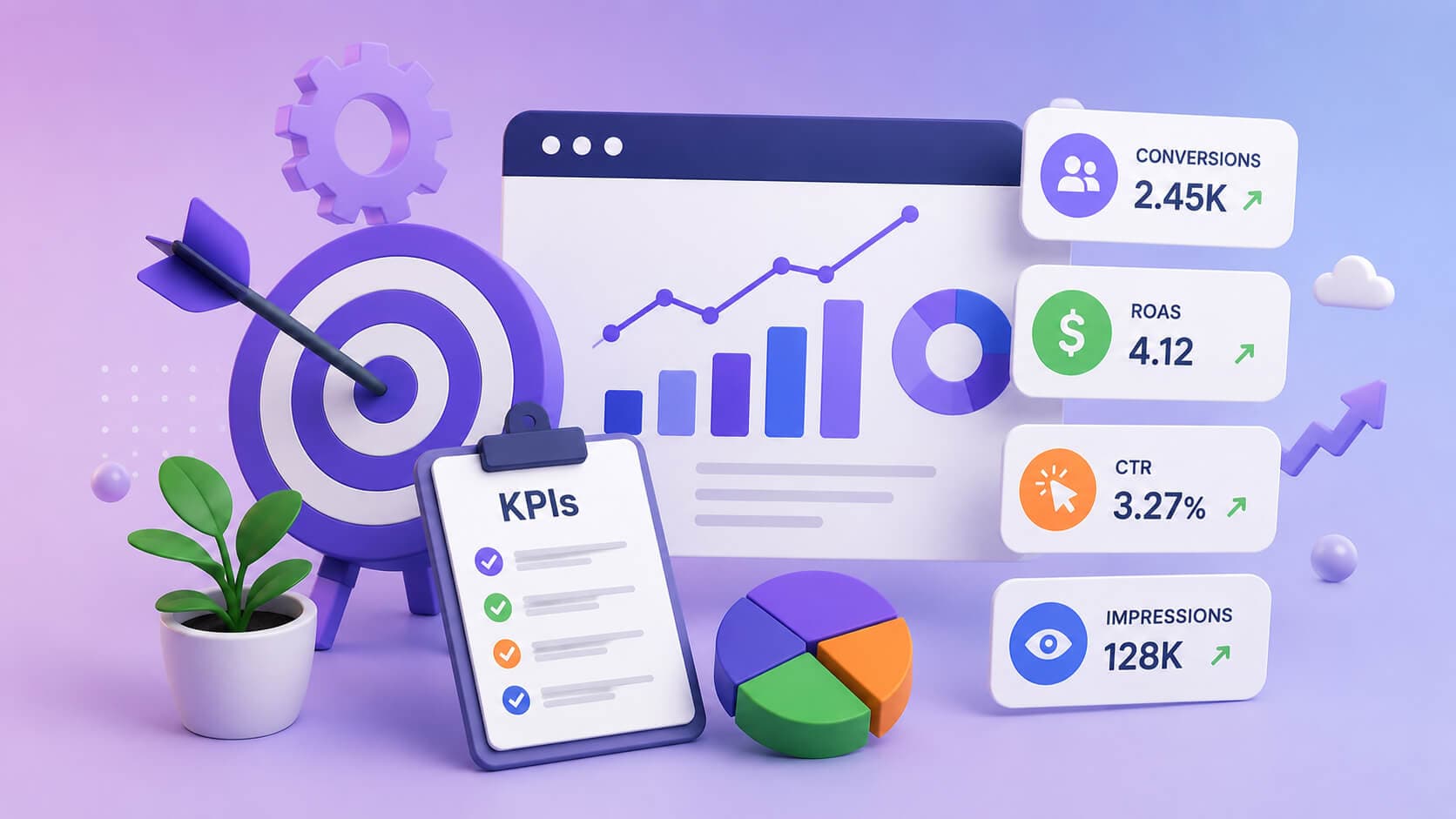
KPIs, or Key Performance Indicators, are measurable values used to evaluate the effectiveness of a marketing campaign.
They help businesses understand whether their marketing activities are achieving the intended results.
KPIs can measure different areas of performance, such as visibility, engagement, traffic, leads, sales, cost efficiency, and return on investment.
Examples of marketing KPIs include:
The right KPIs depend on the campaign objective.
A brand awareness campaign should not be judged the same way as a lead generation campaign. A sales campaign should not be evaluated only by likes or reach.
KPIs must match the goal.
KPIs matter because they turn marketing performance into measurable insights.
Without KPIs, businesses may rely on assumptions. They may think a campaign is performing well because it has high reach, but if the goal is sales and no conversions are happening, the campaign may not be effective.
KPIs help businesses:
Across international markets, campaigns without KPIs often fail to deliver meaningful outcomes because there is no clear way to evaluate success.
KPIs create accountability.
They help marketing teams and business owners focus on results that matter.
Not all metrics are useful KPIs.
A good KPI is specific, measurable, relevant, and connected to a business goal.
A poor KPI is vague, disconnected, or focused only on surface-level activity.
The difference is clear:
For example, tracking likes may be useful for engagement, but it is not enough if the business goal is lead generation.
A strong KPI should help answer a clear question:
Is this campaign helping the business move closer to its goal?
Campaigns without KPIs often become difficult to manage.
The business may spend money, publish content, launch ads, and generate activity, but the team cannot clearly understand whether the campaign is effective.
Without KPIs, businesses may struggle to know:
This can lead to poor decisions and wasted spend.
KPIs give campaigns direction.
They help teams optimize based on data, not guesswork.
Many businesses track metrics, but not always the right ones.
A campaign can have too much data and still lack clarity. The problem is not always a lack of reporting. Sometimes the issue is tracking numbers that do not support decision making.
Common KPI mistakes include:
These mistakes limit campaign performance across international markets.
KPIs should simplify decision making, not complicate it.
Setting the right KPIs starts with understanding the purpose of the campaign.
A campaign should not begin with the question, “What should we post?” or “How much should we spend?”
It should begin with, “What are we trying to achieve?”
The first step is to define the campaign objective.
Objectives may include:
Each objective requires different KPIs.
If the objective is awareness, reach and impressions may matter. If the objective is lead generation, cost per lead and conversion rate matter more.
Clear objectives make KPI selection easier.
KPIs should reflect real performance.
A relevant KPI is one that helps evaluate the actual goal of the campaign.
For example:
The goal is not to track every possible number.
The goal is to track the metrics that explain success.
Marketing KPIs should support business growth.
A campaign may perform well on platform metrics but still fail to support business goals. For example, a campaign may receive many clicks, but if the clicks do not lead to inquiries, sales, or meaningful actions, performance may be weak.
KPIs should connect to:
This ensures marketing is not separated from business performance.
KPIs are not only for reporting after a campaign ends.
They should guide optimization while the campaign is active.
Businesses should review performance regularly and use KPI data to improve:
This aligns with search engine marketing strategies that improve campaign performance and measurable outcomes.
Campaigns improve when data is used actively.
Different campaign goals require different KPI categories.
A strong marketing strategy often tracks several types of KPIs to understand the full campaign journey.
Awareness KPIs measure how many people are exposed to the campaign.
They are useful when the goal is to increase visibility and introduce the brand to a wider audience.
Awareness KPIs include:
These KPIs help businesses understand how visible the campaign is.
However, awareness alone does not always mean conversion.
Engagement KPIs measure how users interact with the campaign.
They show whether the audience is interested enough to click, react, comment, share, watch, or spend time with the content.
Engagement KPIs include:
These KPIs help measure content relevance and audience interest.
Strong engagement can support brand recall and future conversions.
Conversion KPIs measure meaningful actions.
These are usually the most important KPIs for campaigns focused on leads, sales, bookings, or direct business results.
Conversion KPIs include:
Conversion KPIs show whether users are taking the intended action.
They help businesses evaluate campaign effectiveness more directly.
Efficiency KPIs measure how cost-effective the campaign is.
They help businesses understand whether the campaign is producing results at a sustainable cost.
Efficiency KPIs include:
Efficiency KPIs are especially important for businesses across international markets that need marketing budgets to deliver measurable value.
They help identify whether money is being spent wisely.
Paid advertising campaigns need clear KPI tracking because budgets are directly involved.
Without KPIs, paid ads can spend money without producing meaningful results.
Paid advertising KPIs may include:
Paid campaigns should be evaluated based on their objective.
A campaign designed for awareness should not be judged only by sales. A campaign designed for conversions should not be judged only by reach.
The objective defines the KPI.
Social media campaigns can support awareness, engagement, traffic, leads, and community growth.
The KPIs should depend on the campaign goal.
Social media KPIs may include:
Social media KPIs should not focus only on likes.
Likes may show interest, but they do not always show business impact.
A strong social media campaign connects engagement with broader marketing goals.
SEO campaigns require long-term KPI tracking because results build over time.
SEO KPIs should measure visibility, traffic quality, and business impact.
SEO KPIs may include:
SEO KPIs help businesses understand whether their website is becoming more visible and effective in search.
For businesses scaling across international markets, SEO KPIs are essential for tracking long-term digital growth.
Businesses should review KPIs regularly, especially when campaigns are active or business goals change.
KPI review is important when:
Reviewing KPIs helps businesses avoid wasting budget and identify opportunities for improvement.
KPIs should evolve as the business evolves.
KPIs are not just numbers.
They guide decisions.
They help businesses understand where to invest, what to improve, and which actions are producing value. Without KPIs, marketing becomes harder to control.
A strong KPI framework helps answer:
Businesses that define clear KPIs can optimize faster and perform better.
A business across international markets using the right KPIs can make smarter marketing decisions.
For example, if a campaign has high clicks but low conversions, the issue may be the landing page, offer, audience quality, or CTA. If a campaign has high reach but low engagement, the creative or message may need improvement.
The right KPIs help a business:
KPIs turn campaign data into action.
Businesses scaling across international markets, including the GCC, Middle East, Europe and beyond, benefit from data driven decision making.
As campaigns grow, budgets increase, audiences expand, and channels multiply. Without clear KPIs, it becomes harder to manage performance.
KPIs support growth by helping businesses:
Growth requires clarity.
KPIs provide that clarity.
At The iBoost, we define KPIs based on business goals, campaign objectives, audience behavior, and channel performance.
We focus on making performance measurable, clear, and actionable. The goal is not only to report numbers, but to understand what those numbers mean and how they can improve results.
Through digital marketing strategies that align campaign performance with measurable business outcomes, we help businesses achieve better results across international markets.
KPIs are essential for measuring, optimizing, and improving campaign performance.
For businesses across international markets, defining and tracking the right KPIs leads to stronger results, smarter budget allocation, and sustainable growth.
KPIs, or Key Performance Indicators, are measurable values used to evaluate whether a marketing campaign is achieving its goals.
KPIs are important because they help businesses measure performance, optimize campaigns, allocate budgets effectively, improve decision making, and drive better results.
A good marketing KPI is specific, measurable, relevant to the campaign objective, and aligned with business goals.
Common mistakes include tracking too many metrics, focusing on vanity metrics, lacking clear objectives, ignoring data insights, and not aligning KPIs with business goals.
A business should review KPIs when campaigns underperform, budgets are inefficient, objectives change, campaigns scale, or marketing results are unclear.