| Sydney, Australia - Apr 11, 2025
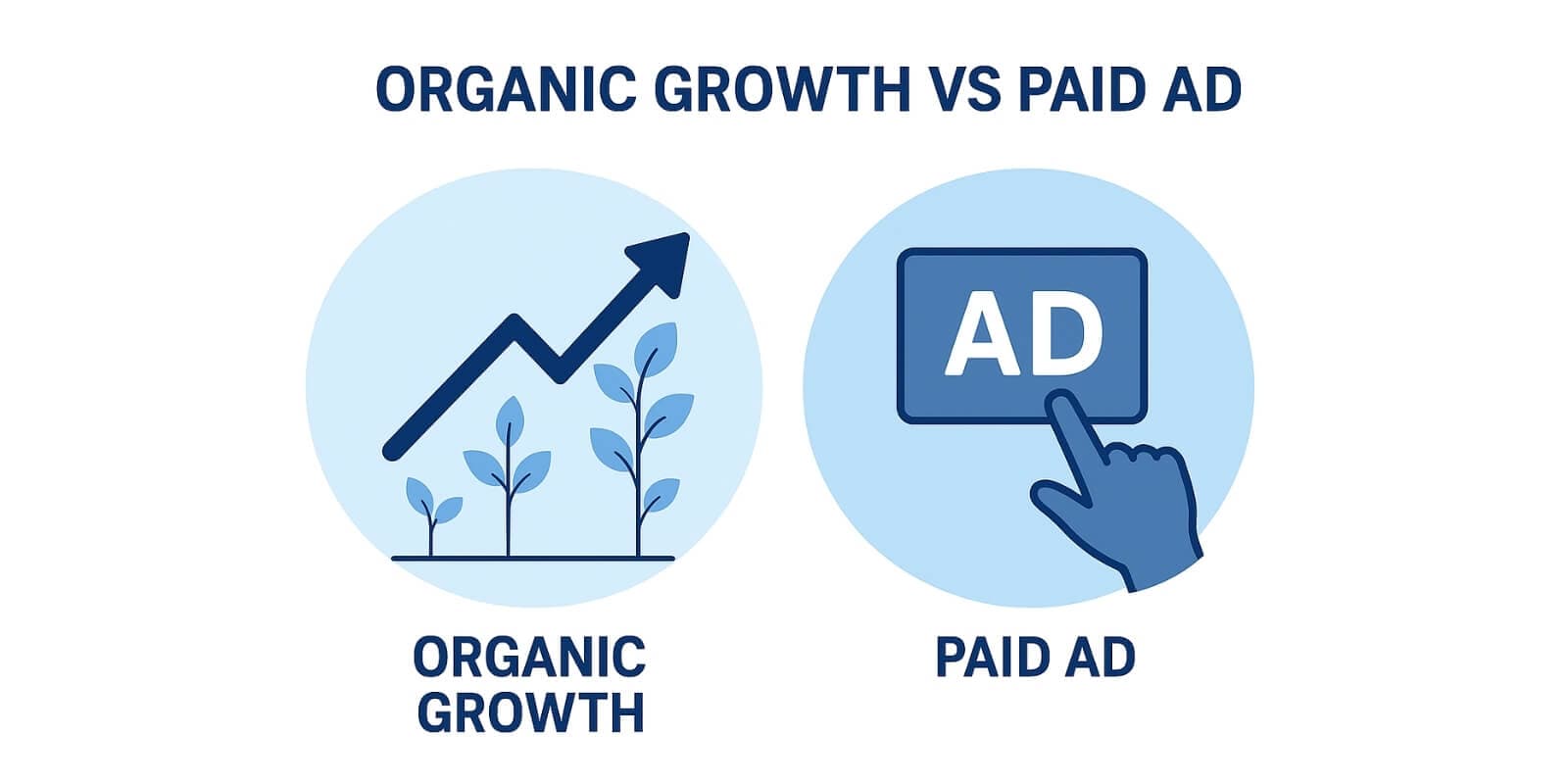
Paid Ads vs. Organic Growth: Which Works Best in Sydney
Businesses looking to grow online often face one important decision: should they invest in paid advertising or focus on organic growth?
Both approaches can drive traffic, visibility, leads, and conversions. However, they work in different ways and support different business goals.
Paid ads can generate immediate visibility.
Organic growth builds long-term authority and sustainability.
For businesses operating in Sydney, understanding the strengths and limitations of each approach is essential for building an effective digital strategy. A business that only relies on ads may struggle when budgets stop. A business that only relies on organic growth may wait too long for results.
This is why companies invest in digital marketing strategies that combine paid and organic approaches to maximize growth and performance.
The real question is not which one works best.
It is how to use both effectively.
What Are Paid Ads?
Paid ads are digital advertising campaigns where businesses pay to promote products, services, content, or offers across online platforms.
Paid advertising can appear on search engines, social media platforms, websites, apps, and video platforms.
Examples of paid ads include:
- Search ads
- Social media ads
- Display ads
- Shopping ads
- Video ads
- Retargeting ads
- Lead generation ads
- Sponsored content
Paid ads provide immediate visibility because businesses can reach targeted audiences as soon as campaigns go live.
This makes paid advertising useful for quick launches, promotions, lead generation, and competitive markets.
What Is Organic Growth?
Organic growth refers to gaining visibility, traffic, engagement, and trust without directly paying for each click or impression.
It is built through long-term digital presence and consistent value creation.
Organic growth includes:
- SEO
- Content marketing
- Blog content
- Social media presence
- Website optimization
- Brand authority
- Email engagement
- Community building
- Educational content
Organic growth does not usually deliver instant results, but it can create stronger long-term value.
It helps businesses become discoverable, trusted, and remembered over time.
Paid Ads vs Organic Growth: Key Differences
Paid ads and organic growth both support digital growth, but they serve different purposes.
Paid ads deliver instant results.
Organic growth takes time.
Paid ads require ongoing budget.
Organic growth builds sustainability.
Paid ads drive quick traffic.
Organic growth builds authority.
Paid ads are useful when a business needs visibility now. Organic growth is useful when a business wants to build long-term digital strength.
Both are essential for businesses in Sydney because digital growth often requires short-term performance and long-term positioning.
Speed of Results
One of the biggest differences between paid ads and organic growth is speed.
Paid ads can generate traffic quickly. Once a campaign is launched, users can start seeing the ad and clicking through to the website or landing page.
Organic growth takes longer. SEO, content, and brand authority need time to build.
Paid ads are useful for:
- Immediate visibility
- Quick traffic
- Time-sensitive campaigns
- Product launches
- Promotions
- Lead generation
- Testing messages
Organic growth is useful for:
- Long-term visibility
- Search authority
- Brand trust
- Sustainable traffic
- Ongoing content value
- Reducing dependency on ads
Speed matters, but speed should not be the only factor.
A strong strategy uses paid ads for momentum and organic growth for stability.
Cost and Budget
Paid ads require a continuous budget.
When the budget stops, the traffic usually stops too. This makes paid ads powerful but dependent on ongoing investment.
Organic growth may require upfront investment in SEO, content, strategy, and website optimization, but it can continue generating value over time.
Paid ads involve costs such as:
- Media spend
- Campaign management
- Creative production
- Landing page optimization
- Testing and reporting
Organic growth involves costs such as:
- SEO strategy
- Content creation
- Website optimization
- Technical improvements
- Social media planning
- Brand development
Paid ads buy visibility.
Organic growth builds visibility.
Both require investment, but they create value differently.
Trust and Credibility
Organic growth often supports trust because users discover the brand through search results, helpful content, social presence, or consistent communication.
When a business appears organically, users may see it as more credible because it feels earned.
Paid ads can also build trust, but they must be supported by strong messaging, design, targeting, and landing pages.
A paid ad can bring attention.
Organic presence can strengthen credibility.
For businesses in Sydney, trust is important because users often compare several brands before deciding. A strong organic presence can make paid campaigns perform better because users can find supporting content, reviews, and brand signals.
Control and Targeting
Paid ads provide more control over targeting.
Businesses can choose audience segments, locations, interests, keywords, behaviors, budgets, placements, and campaign objectives.
This makes paid ads highly useful for reaching specific audiences quickly.
Organic growth provides less immediate control, but it can attract users who are actively searching or engaging naturally.
Paid ads allow businesses to control:
- Who sees the message
- Where the message appears
- How much budget is spent
- Which offer is promoted
- Which audience is tested
- What campaign objective is optimized
Organic growth allows businesses to build:
- Search visibility
- Topic authority
- Brand recall
- Social credibility
- Long-term discoverability
- Audience trust
Paid ads offer targeting precision.
Organic growth offers long-term presence.
When to Use Paid Ads
Paid ads are ideal when businesses need fast visibility, measurable traffic, or immediate campaign performance.
Businesses should use paid ads when:
- Launching campaigns quickly
- Generating immediate traffic
- Promoting offers
- Entering competitive markets in Sydney
- Testing new messages
- Driving lead generation
- Supporting product launches
- Retargeting interested users
- Promoting seasonal campaigns
- Scaling successful offers
Paid ads are especially useful when a business wants to reach people now rather than wait for organic visibility to grow.
They are also useful for testing what messages, offers, and audiences perform best.
When to Use Organic Growth
Organic growth is ideal when businesses want to build long-term visibility, authority, and trust.
Businesses should focus on organic growth when:
- Building long-term visibility
- Reducing dependency on ads
- Strengthening brand authority
- Scaling sustainably in Sydney
- Improving SEO performance
- Building content value
- Increasing credibility
- Growing social presence
- Educating audiences
- Supporting long-term customer journeys
Organic growth helps businesses become visible even when they are not actively paying for each click.
It creates a stronger digital foundation.
Why Businesses Need Both
Businesses need both paid ads and organic growth because each one solves a different problem.
Paid ads provide immediate results.
Organic growth builds long-term stability.
Paid ads test strategies.
Organic growth reduces cost over time.
Paid ads help businesses move quickly, while organic growth helps them build lasting presence.
Together, they create a balanced strategy.
For example, a business can use paid ads to drive traffic to a campaign while building SEO content that supports long-term search visibility. It can use ads to test messaging, then use the strongest insights in organic content. It can use organic posts to build credibility and paid ads to amplify the best-performing content.
This aligns with search engine marketing strategies that improve paid campaign performance and visibility.
How Paid and Organic Work Together
Paid and organic strategies become stronger when they are connected.
Paid ads can help businesses test:
- Headlines
- Offers
- Audiences
- Services
- Landing pages
- Calls to action
- Content topics
- Visual direction
The insights from paid ads can then improve organic content, SEO pages, and social media strategy.
Organic growth can support paid ads by improving:
- Brand credibility
- Website content
- Landing page quality
- Search presence
- Audience trust
- Retargeting audiences
- Social proof
When paid and organic strategies work together, businesses can improve both short-term performance and long-term growth.
Common Mistakes Businesses Make
Many businesses limit their growth by choosing only one side.
Some rely only on ads and ignore organic growth. Others expect organic growth to deliver immediate results without giving it enough time.
Common mistakes include:
- Relying only on ads
- Ignoring SEO
- Expecting fast organic results
- Not integrating both strategies
- Misallocating budgets
- Running ads without strong landing pages
- Creating content without search strategy
- Ignoring retargeting
- Not tracking performance
- Stopping campaigns too early
These mistakes limit growth across Sydney.
A strong digital strategy should not treat paid and organic as separate efforts.
They should support each other.
Paid Ads and SEO
Paid ads and SEO can work together effectively.
Paid search campaigns can help a business appear quickly for important keywords, while SEO works toward long-term organic rankings.
This is useful when:
- The market is competitive
- SEO rankings are still growing
- The business is launching new services
- Immediate traffic is needed
- Keyword performance needs testing
Paid search can provide quick insights into which keywords convert.
SEO can then use those insights to improve content strategy and long-term visibility.
Together, paid search and SEO create stronger search presence.
Paid Ads and Social Media
Paid ads can also support social media growth.
Organic social media helps build community, trust, and consistent brand presence. Paid social ads help amplify reach, target specific users, and drive traffic or leads.
Social media ads are useful for:
- Increasing reach
- Promoting content
- Generating leads
- Retargeting engaged users
- Driving website traffic
- Supporting product launches
- Building awareness
Organic social media is useful for:
- Building brand personality
- Sharing value
- Staying visible
- Engaging with audiences
- Strengthening trust
- Supporting brand recall
The strongest social strategies often combine organic content with paid amplification.
Strategic Reality Behind Paid vs Organic
Paid and organic strategies serve different purposes.
Paid ads are not a replacement for organic growth.
Organic growth is not a replacement for paid performance.
Paid ads help businesses generate faster results. Organic growth helps businesses build long-term equity.
Businesses that combine both achieve stronger and more stable growth.
A balanced strategy should answer:
- What do we need immediately?
- What do we need to build long term?
- Which channels are driving qualified traffic?
- Which content supports trust?
- Which campaigns are converting?
- How can paid insights improve organic strategy?
- How can organic presence improve paid performance?
The best approach depends on business goals, market competition, budget, and growth stage.
Real World Application
A business in Sydney can use paid ads for immediate traffic while building organic channels for long-term growth.
For example, a company launching a new service can run paid ads to generate traffic and inquiries quickly. At the same time, it can create SEO pages, blog content, and social media content to build long-term visibility and trust.
This creates a sustainable marketing system.
Paid ads create momentum.
Organic growth creates foundation.
Together, they support stronger performance.
Paid Ads, Organic Growth, and Scaling
Businesses expanding in Sydney, including Central Business District, North Sydney, Parramatta, Chatswood and beyond, benefit from combining short-term and long-term strategies.
As businesses grow, they need both visibility and stability. Paid ads can support launches, campaigns, and quick market entry. Organic growth can support authority, trust, and lower long-term dependency on media spend.
A combined approach helps businesses:
- Drive faster traffic
- Build long-term visibility
- Improve brand authority
- Increase conversion potential
- Reduce wasted spend
- Strengthen customer trust
- Improve campaign learning
- Support sustainable growth
A business that uses both channels strategically is better prepared to scale.
Expert Perspective from The iBoost
At The iBoost, we design integrated strategies that combine paid and organic channels.
We focus on using paid ads for immediate visibility, testing, retargeting, and campaign performance, while building organic growth through SEO, content, and consistent brand communication.
Through digital marketing strategies that combine paid and organic approaches to maximize growth and performance, we help businesses achieve measurable results across Sydney.
Paid ads and organic growth are both essential.
For businesses in Sydney, the best approach is to combine them strategically to achieve faster results, stronger authority, and long-term sustainable growth.
Frequently Asked Questions
Paid ads involve paying advertising platforms for visibility and traffic, while organic growth builds visibility through SEO, content, social media presence, and long-term brand authority.
Paid ads are better for immediate visibility and quick traffic, while organic growth is better for long-term sustainability, trust, and authority. The best strategy combines both.
A business should use paid ads when launching campaigns quickly, promoting offers, generating immediate traffic, testing messages, or entering competitive markets.
A business should focus on organic growth when building long-term visibility, reducing dependency on ads, strengthening authority, improving SEO, and scaling sustainably.
Businesses should combine both because paid ads generate quick results, while organic growth builds long-term stability. Together, they create a stronger and more balanced digital strategy.