| Dubai, UAE - Mar 13, 2025
What Makes a Logo Work Across Digital Platforms in Dubai
A logo may look strong on a presentation slide, but that does not mean it will work across digital platforms.
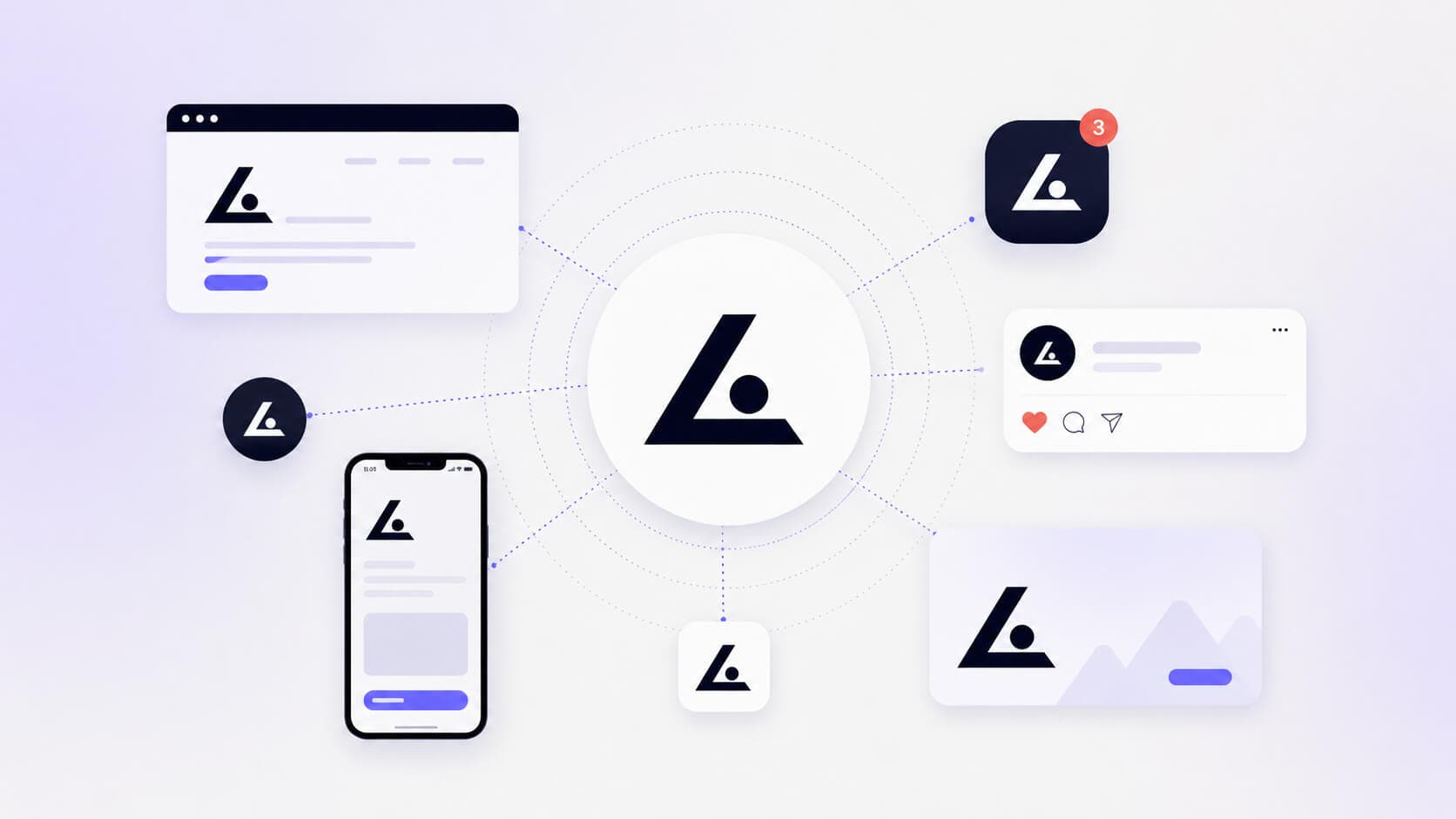
Today, a logo needs to live in many places at the same time. It appears on websites, mobile screens, profile pictures, app icons, email signatures, digital ads, videos, reels, stories, thumbnails, search results, and sometimes even tiny favicon spaces. If the logo loses clarity in these environments, the brand becomes harder to recognize.
A strong digital logo is not only beautiful.
It is usable.
For businesses operating in Dubai market, digital recognition is built through repeated exposure across different channels. People may first see a brand on a social media post, then visit the website, then see an ad, then receive an email, then return through a search result. If the logo looks different, unclear, or difficult to read in each place, the brand loses consistency.
This is why brand identity development that creates clear, flexible, and recognizable visual systems should consider digital platforms from the beginning.
A logo should not only represent the brand.
It should perform wherever the brand appears.
Why Digital Logo Performance Matters
Digital platforms are fast, crowded, and visually compressed.
People often see logos in small sizes, moving feeds, busy layouts, dark backgrounds, bright screens, and short attention windows. A logo that depends on too many details may look impressive in large format but fail when reduced to a social media profile image or mobile navigation bar.
Digital logo performance matters because recognition happens quickly.
Users do not stop to analyze a logo. They identify shapes, colors, symbols, and familiar signals almost instantly. If the logo is too complex, too thin, too wide, or too detailed, it may not create a strong memory.
A logo that works digitally should support:
- fast recognition
- clear visibility
- small-size readability
- flexible usage
- consistent brand presence
- strong contrast
- easy adaptation
- smooth use across content formats
The goal is not only to design a logo that looks good.
The goal is to design a logo that remains strong in real digital use.
Simplicity Makes a Logo Easier to Recognize
Simplicity is one of the most important qualities of a digital logo.
This does not mean the logo should be boring. It means the logo should be easy to understand and easy to recognize at different sizes.
A simple logo usually has fewer unnecessary elements. It avoids visual noise. It has a clear shape, readable typography, and a strong structure. This makes it easier for audiences to remember.
Digital platforms reward clarity. A complex logo may lose its meaning when used as a profile icon, watermark, app icon, or small header logo. Fine lines may disappear. Small text may become unreadable. Decorative details may turn into visual clutter.
A simple logo can still feel premium, expressive, bold, elegant, or playful. The key is not to remove personality. The key is to remove confusion.
This connects with logo design that balances brand personality, clarity, and long-term recognition.
A logo should be distinctive enough to stand out and simple enough to survive digital use.
Scalability Is Essential
A digital logo needs to work at different sizes.
It may appear large on a homepage hero section and very small as a browser favicon. It may be used on a billboard one day and inside a mobile app interface the next. If the logo only works at one size, it is not flexible enough for modern branding.
Scalability means the logo remains clear when enlarged or reduced.
A scalable logo should maintain:
- recognizable shape
- readable text
- clean spacing
- strong proportions
- visible symbol details
- clear contrast
- balanced structure
When a logo is tested only in large format, problems may be missed. A thin wordmark may look elegant at full size but disappear on mobile. A detailed icon may look artistic on a presentation but become unclear on a profile picture. A long horizontal logo may fit a website header but fail in a square social media space.
This is why logo testing should include real digital placements.
A logo should be reviewed in small sizes before it is approved.
A Responsive Logo System Works Better Than One Logo
Modern brands usually need more than one logo version.
A single logo may not fit every platform. This is why strong brand identities often include a responsive logo system. This means the logo has multiple approved versions for different sizes, spaces, and use cases.
A responsive logo system can include:
- primary logo
- secondary logo
- horizontal version
- stacked version
- icon version
- wordmark version
- simplified mark
- favicon version
- social profile version
- one-color version
- dark background version
- light background version
This does not mean the brand has many different logos. It means the brand has one logo system with flexible versions that stay connected.
This is especially important for digital platforms because each space has different requirements. A website header may need a horizontal logo. A social media profile may need a square icon. A video watermark may need a simplified mark. An app icon may need a symbol without small text.
A responsive logo system protects consistency because the brand is not forced to improvise every time the logo is used.
Legibility Should Come Before Decoration
A logo needs to be readable.
This is especially true when the logo includes text. If the brand name cannot be read clearly, the logo may lose its main function.
Digital legibility depends on typography, spacing, contrast, size, and shape. A font may look stylish but become difficult to read on mobile. A thin typeface may feel elegant but disappear on bright screens. Tight letter spacing may look modern but reduce clarity in small sizes.
A digital logo should avoid:
- overly thin letters
- excessive decoration
- unclear letterforms
- crowded spacing
- small taglines
- complex shadows
- low contrast colors
- unreadable details
- too many words
A tagline may work in a large brand presentation, but it may not belong inside the main logo for digital use. In many cases, the logo should have a version without the tagline so it can remain clear in small spaces.
A logo should first be understood.
Then it can be admired.
Strong Contrast Improves Visibility
Digital platforms use different backgrounds.
A logo may appear on white, black, colored, photographic, or animated backgrounds. If the logo does not have enough contrast, it can become hard to see.
Strong contrast helps the logo stay visible across different environments. This includes contrast between the logo and the background, as well as contrast inside the logo itself if it uses multiple colors.
A strong logo system should include approved versions for different backgrounds.
For example, a brand may need a full-color logo for light backgrounds, a white version for dark backgrounds, a black version for simple use, and a single-color version for limited applications.
This prevents inconsistent editing. Without clear versions, team members may stretch, recolor, outline, or alter the logo incorrectly just to make it visible.
Contrast is not only a design detail.
It is a recognition tool.
The Logo Should Fit Social Media Spaces
Social media is one of the most demanding places for a logo.
Profile images are usually small and often circular. Posts may appear quickly in feeds. Reel covers, story icons, thumbnails, ads, and comment sections all reduce the time and space available for recognition.
A logo that works on social media should be easy to identify at a glance.
For many brands, the full logo may not be the best choice for a profile picture. A simplified icon or brand mark may work better. If the logo is too wide, too detailed, or too text-heavy, it may become unreadable inside a circular crop.
This connects with social media strategies that keep brand presence clear, consistent, and recognizable across platforms.
The social media version of a logo should be tested in real placements, including profile image previews, reel covers, story highlights, paid ads, and mobile feeds.
Social media does not give a logo much time.
The logo needs to work instantly.
The Website Version Needs Practical Flexibility
A logo on a website has different requirements.
It may appear in the header, footer, mobile menu, loading screen, favicon, forms, checkout pages, blog pages, landing pages, and email templates. Each placement may require a different size or layout.
A website logo should not slow down the page, break the layout, or become unreadable on mobile.
This connects with website design and development that turns brand identity into a clear and functional digital experience.
For websites, the logo should have clean file formats and practical dimensions. It should work in desktop headers and mobile menus. It should also have a simplified favicon that remains recognizable in browser tabs.
The website is often the main place where a logo becomes part of a full brand experience. It should connect naturally with the color system, typography, layout, buttons, images, and calls to action.
A logo should not feel pasted onto the website.
It should feel integrated into the digital identity.
File Formats Matter
A strong logo system needs the right file formats.
The design may be excellent, but if the files are poor quality, the logo can appear blurry, stretched, pixelated, or inconsistent across platforms.
Digital logo files should usually include vector formats and web-ready formats.
Useful formats may include:
- SVG for websites and scalable digital use
- PNG for transparent backgrounds
- JPG for simple image use
- PDF for professional sharing
- EPS or AI for design and production use
- favicon files for browser tabs
- app icon files when needed
SVG is especially useful for digital platforms because it remains sharp at different sizes. PNG can be useful when transparency is needed. JPG is less flexible for logos because it does not support transparent backgrounds and may lose quality through compression.
A logo should never depend on one low-resolution image file.
The brand needs a proper logo file package.
Color Consistency Protects Recognition
Color is one of the strongest recognition signals in branding.
If a logo appears in slightly different shades across platforms, the brand can start to feel inconsistent. This often happens when teams do not have approved color codes or when files are exported incorrectly.
A digital logo system should define color values clearly.
This can include:
- HEX values for websites and digital design
- RGB values for screens
- CMYK values for print
- Pantone values when needed
- approved color combinations
- background usage rules
- one-color usage rules
- accessibility contrast checks
For digital platforms, HEX and RGB values are especially important. They help keep the logo consistent across websites, social media designs, ads, presentations, and email templates.
Color should not be guessed.
It should be documented.
Motion and Video Usage Should Be Considered
Logos are no longer static all the time.
They often appear in motion graphics, video intros, reel endings, animated ads, loading screens, presentations, and digital signage. A logo that works in motion can strengthen brand recognition, but only if the animation respects the identity.
Motion usage should be simple, clear, and consistent with the brand personality.
For example, a luxury brand may need slow and refined motion. A tech brand may need a cleaner and faster reveal. A playful brand may use more energy. The movement should support the brand, not distract from it.
A logo animation should not make the logo harder to recognize.
It should reinforce the shape, rhythm, and presence of the identity.
This is where digital marketing strategies that align creative assets with audience behavior and platform requirements can help brands use logo assets more effectively across campaigns.
Digital platforms use movement often.
The logo system should be ready for that.
Brand Guidelines Keep the Logo Consistent
Even a strong logo can fail if people use it incorrectly.
Brand guidelines protect the logo after it is designed. They explain how the logo should and should not be used. They help teams, agencies, partners, and vendors keep the brand consistent.
Logo guidelines should explain:
- correct logo versions
- minimum size
- clear space
- background usage
- color variations
- incorrect usage
- file formats
- placement rules
- social media usage
- website usage
- motion usage
- co-branding rules
Without guidelines, people may stretch the logo, change colors, add effects, use old files, place it on busy backgrounds, or create unapproved versions.
This connects with branding guidelines that keep visual identity consistent across teams, platforms, and customer touchpoints.
A logo needs rules to stay strong.
Common Mistakes That Make Logos Fail Digitally
Many logos fail online because they are designed for appearance without enough attention to practical use.
Common digital logo mistakes include:
- too much detail
- unreadable typography
- weak contrast
- no icon version
- no responsive system
- poor file formats
- no favicon
- no social profile version
- inconsistent colors
- relying on a tagline
- using thin lines
- ignoring mobile sizes
- no dark background version
- no brand guidelines
These issues can make the logo harder to use and harder to recognize.
The brand may then start creating quick fixes for each platform, which leads to inconsistency.
A logo should reduce design problems.
Not create new ones.
How to Test a Logo for Digital Platforms
Before approving a logo, the brand should test it in real digital situations.
This helps reveal issues that may not appear in a design presentation.
A proper digital logo test can include:
- website header preview
- mobile menu preview
- social media profile image
- Instagram post
- reel cover
- story highlight icon
- digital ad
- email signature
- favicon
- dark background
- light background
- small-size test
- video watermark
- presentation cover
If the logo works clearly across these placements, it is more likely to perform well in real use.
Testing protects the brand from approving a logo that only works in ideal conditions.
A digital logo should be tested where people will actually see it.
Real World Application
A business in Dubai may launch a logo that looks strong in a large presentation but becomes unclear on social media and mobile screens.
The brand may notice that the name is hard to read, the icon loses detail, the colors look different across platforms, and the profile picture does not feel recognizable. These issues can weaken audience recognition, especially when the brand is trying to grow across Jumeirah, Jebel Ali, Deira and beyond.
A stronger approach would be to build a complete logo system from the start.
This would include a primary logo, simplified mark, social icon, favicon, light and dark versions, correct file formats, and clear usage guidelines. The logo would be tested on the website, social media, ads, and mobile screens before launch.
This helps the business create a brand presence that feels consistent everywhere.
The audience should not need to adjust to different versions of the brand.
They should recognize it quickly.
Expert Perspective from The iBoost
At The iBoost, we believe a logo should be designed for real brand use, not only for visual approval.
A strong logo needs strategy, clarity, flexibility, and a system that works across digital platforms. It should look good, but it should also stay recognizable across websites, social media, advertising, videos, and mobile experiences.
Through logo design and brand identity services that create flexible and recognizable visual systems, we help businesses build logos that support long-term recognition and practical digital use.
For businesses in Dubai, a digital-ready logo can make the brand easier to recognize, easier to apply, and easier to remember.
A logo is not only a mark.
It is a digital recognition system.
Frequently Asked Questions
A logo works well on digital platforms when it is simple, scalable, readable, flexible, high contrast, and supported by different versions for websites, social media, ads, and mobile use.
A logo needs different versions because digital spaces have different sizes and formats. A website header, social profile image, favicon, and video watermark may each need a different approved version.
A responsive logo system is a set of approved logo variations that work across different sizes and platforms while keeping the same brand identity.
Scalability is important because the logo must stay clear when used very large or very small, from homepage sections to browser favicons and mobile icons.
A digital logo package should usually include SVG, PNG, JPG, PDF, and favicon files, with design source files when needed for future brand applications.