| Dubai, UAE - Aug 20, 2025
How Smart Product Categories Improve Online Sales in Dubai
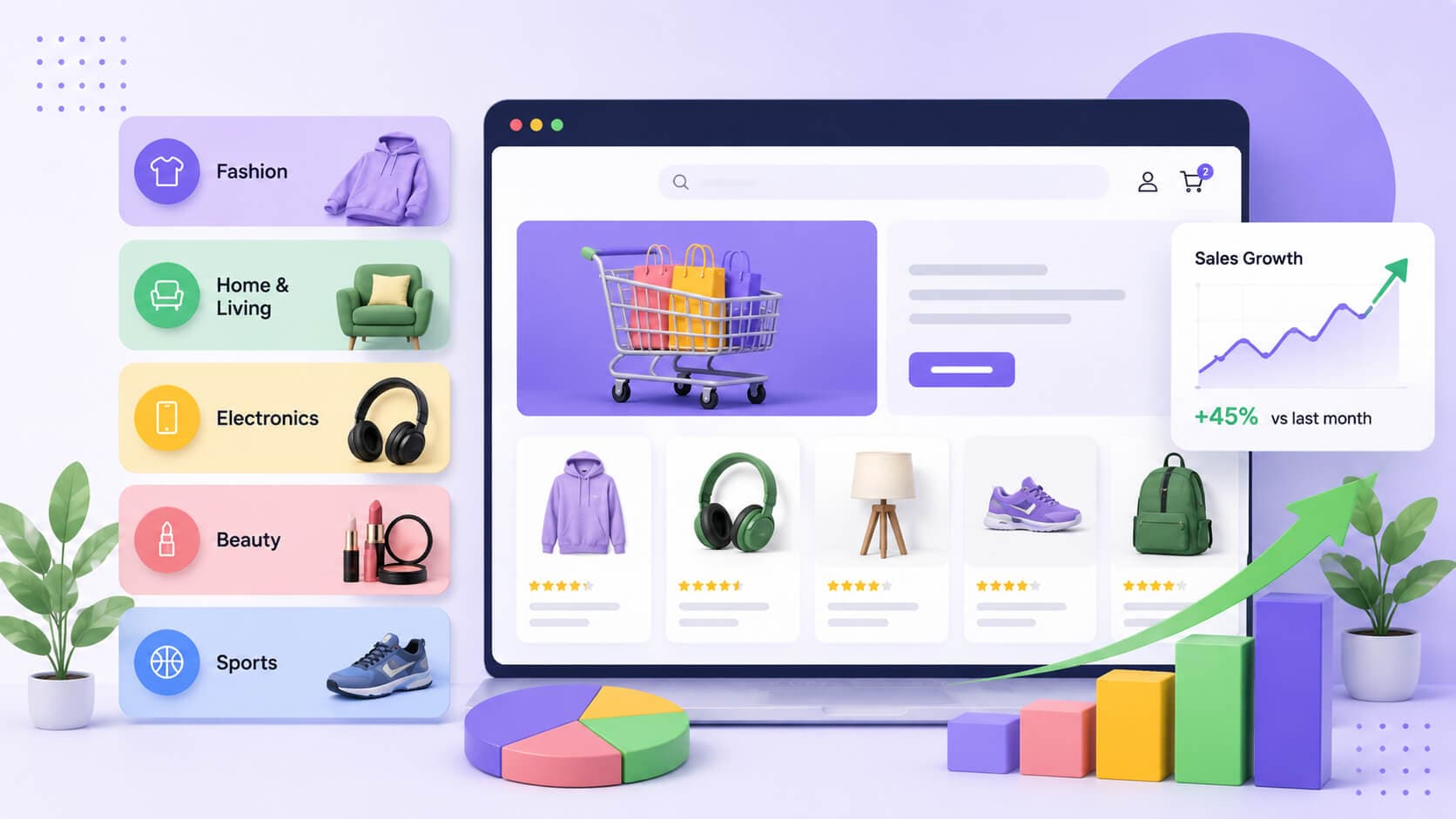
Product categories are more than a way to organize an online store.
They directly affect how easily customers find products, compare options, and decide what to buy. When product categories are clear, logical, and user focused, the shopping journey becomes smoother and online sales improve.
For businesses operating in Dubai, smart product categories can make the difference between a customer browsing with confidence and leaving because the store feels confusing. In Dubai market, customers expect online stores to be easy to navigate and organized around how they actually shop.
This is why businesses invest in e-commerce website development strategies that improve product organization, usability, and online sales performance.
Smart categories help customers buy faster.
What Smart Product Categories Mean
Smart product categories are organized sections that help customers find products quickly and logically.
They are not created only from the business perspective. They are created around how customers search, compare, and make decisions.
Smart product categories can be based on:
- product type
- customer need
- use case
- collection
- size
- price range
- material
- style
- brand
- popularity
- occasion
- problem solved
The goal is to make product discovery easier.
When categories make sense, customers feel more in control of the shopping experience.
Why Product Categories Matter
Product categories matter because they shape the customer journey.
If categories are confusing, users may struggle to find what they want. If they are clear, customers can move through the store naturally.
Smart product categories help businesses:
- improve product discovery
- increase user engagement
- reduce shopping friction
- support better navigation
- improve conversion rates
- increase product visibility
- reduce bounce rates
- support online sales growth
For businesses in Dubai, better category structure can directly improve how customers interact with the store.
The easier products are to find, the easier they are to buy.
Smart Categories vs Poor Categories
Smart categories guide customers clearly.
Poor categories create confusion.
The difference is clear:
- smart categories match customer behavior
- poor categories follow internal business logic only
- smart categories make browsing easier
- poor categories make products harder to find
- smart categories improve product visibility
- poor categories bury important items
- smart categories support conversions
- poor categories increase drop-offs
- smart categories simplify decision making
- poor categories create friction
Categories should not force customers to think too much.
They should help customers find the right product quickly.
Why Poor Product Categories Reduce Sales
Poor category structure can make an online store feel difficult to use.
Customers may not understand where to click, which section to browse, or how to compare products. This creates friction and reduces the chance of purchase.
Common category problems include:
- unclear category names
- too many categories
- too few categories
- overlapping sections
- products placed in the wrong category
- missing filters
- confusing hierarchy
- poor mobile category layout
- no search support
- category pages with weak product organization
These issues can make customers leave before they find what they need.
A confusing store loses sales even when the products are strong.
How Smart Categories Improve Online Sales
Smart product categories improve sales by making the shopping journey easier and more efficient.
Faster Product Discovery
Customers want to find products quickly.
If they need too many clicks or too much effort, they may leave. Smart categories reduce the time between arrival and product discovery.
Faster discovery helps users:
- find relevant products
- browse more easily
- compare options faster
- stay engaged longer
- move closer to purchase
This improves the overall shopping experience.
Better Navigation
Navigation becomes stronger when categories are clear and organized.
Customers should immediately understand where to go and how to browse.
Better category navigation includes:
- clear category labels
- logical grouping
- simple menu structure
- visible subcategories
- easy filter access
- search support
- mobile-friendly layouts
This aligns with user experience design strategies that improve navigation, product discovery, and e-commerce conversions.
Good navigation reduces friction and helps users stay focused.
Stronger Product Visibility
Smart categories help products get seen.
If products are hidden in the wrong sections or buried under unclear labels, customers may never find them.
Good category structure improves visibility by:
- grouping related products
- highlighting best sellers
- organizing collections clearly
- supporting seasonal categories
- showing related items
- improving browsing flow
Better visibility creates more chances for sales.
Easier Decision Making
Customers need to compare products before buying.
Smart categories help users narrow their choices and make decisions faster.
This can be supported through:
- filters
- sorting options
- comparison-friendly layouts
- clear product thumbnails
- visible prices
- product tags
- category descriptions
When decisions feel easier, customers are more likely to buy.
Category Pages and User Experience
Category pages are important parts of the e-commerce experience.
They act as bridges between the homepage and product pages. A strong category page helps users understand what is available and guides them toward relevant products.
A strong category page should include:
- clear category title
- short category description
- organized product grid
- filters
- sorting options
- visible prices
- product images
- quick product details
- clear navigation
- mobile-friendly layout
A category page should not feel like a random product list.
It should feel organized and useful.
Product Category Naming
Category names should be simple and easy to understand.
Customers should not need to guess what a category means. If the naming is unclear, users may avoid clicking.
Good category names are:
- clear
- simple
- specific
- customer friendly
- easy to scan
- relevant to the product
- aligned with search behavior
For example, a customer-friendly name is usually better than an internal business term.
Category names should match how customers think.
Filters and Sorting
Filters and sorting make categories more useful.
They help customers narrow down options based on what matters to them.
Useful filters can include:
- price
- size
- color
- brand
- material
- availability
- style
- rating
- collection
- use case
Sorting options can include:
- newest
- best selling
- price low to high
- price high to low
- highest rated
- most popular
Filters reduce effort.
They help users find the right product faster.
Smart Categories and SEO
Smart product categories also support SEO.
Category pages can target important search terms and help search engines understand the structure of the store.
SEO-friendly category pages can include:
- clear page titles
- optimized category descriptions
- clean URLs
- internal links
- structured headings
- relevant product grouping
- helpful copy
- strong page performance
This connects with search engine optimization strategies that improve category visibility and organic e-commerce traffic.
Well-structured categories help both users and search engines.
They make the store easier to navigate and easier to understand.
Smart Categories and Mobile Shopping
Mobile shopping depends heavily on simple structure.
On smaller screens, confusing categories become even harder to use. Customers need menus, filters, and category pages that are clear and easy to tap.
Mobile-friendly categories should include:
- simple menus
- clear category labels
- easy filter access
- large tap areas
- fast loading pages
- clean product grids
- sticky cart access
- simple navigation back to categories
A strong mobile category experience can improve conversions.
If customers can browse easily on mobile, they are more likely to buy.
Smart Categories and Cross Selling
Smart categories can support cross selling.
When related products are grouped logically, customers may discover additional items they want.
Cross selling can be improved through:
- related product sections
- shop the look categories
- complete the set categories
- accessories categories
- bundle suggestions
- complementary product links
- collection-based browsing
This can increase average order value.
The easier related products are to discover, the more likely customers are to add them to their cart.
Common Product Category Mistakes
Many online stores lose sales because categories are not planned properly.
Common mistakes include:
- using vague category names
- creating too many menu items
- hiding important products
- not using filters
- poor mobile menu structure
- mixing unrelated products
- not updating categories
- creating duplicate categories
- ignoring customer search behavior
- weak category page design
These mistakes make shopping harder.
Harder shopping leads to fewer conversions.
When Businesses Should Improve Product Categories
Businesses should improve product categories when customers struggle to browse or products are not selling as expected.
This is especially important when:
- users search but do not buy
- product pages get low traffic
- customers ask where to find items
- bounce rates are high
- mobile browsing is weak
- category pages feel cluttered
- the store has many products
- new collections are added
- competition increases in Dubai
A better category structure can improve the full shopping journey.
It helps customers move from browsing to buying with less effort.
Strategic Reality Behind Smart Categories
Smart categories are not just about organization.
They are about sales strategy.
A strong category structure should answer:
- how do customers search?
- what products should be grouped together?
- which categories are most important?
- what filters do customers need?
- which products should be highlighted?
- how does the category support conversion?
- how does the structure work on mobile?
- how does it support SEO?
The best category systems combine customer behavior, business goals, and product logic.
Good organization creates better shopping experiences.
Better shopping experiences improve sales.
Real World Application
A business in Dubai improving product categories can make its online store easier to use and more effective.
Smart categories can help the business:
- improve product discovery
- increase online sales
- reduce browsing friction
- improve mobile shopping
- increase category page engagement
- support SEO visibility
- improve customer satisfaction
- increase checkout potential
For example, an online store can reorganize products by customer needs, add filters, improve category names, create clearer subcategories, and highlight best-selling products.
This helps customers find what they want faster.
Product Categories and E-commerce Growth
Businesses scaling in Dubai, including Jumeirah, Jebel Ali, Deira and beyond, benefit from smart category systems that support larger product catalogs.
As stores grow, product organization becomes more important. Without a clear structure, customers may feel overwhelmed.
Smart product categories support growth by helping businesses create:
- clearer navigation
- stronger product visibility
- better shopping journeys
- improved SEO structure
- higher conversion potential
- better mobile usability
- stronger cross selling
- more scalable product management
Growth requires structure.
Smart categories give online stores that structure.
Expert Perspective from The iBoost
At The iBoost, we design e-commerce websites that make product discovery simple, intuitive, and conversion focused.
We build category structures that help customers browse easily, find relevant products faster, and move toward checkout with confidence.
Through e-commerce website development strategies that improve product organization, usability, and online sales performance, we help businesses create stronger online stores across Dubai.
Smart product categories improve online sales by reducing friction, improving discovery, and making the shopping journey easier.
For businesses in Dubai, investing in better category structure can improve usability, visibility, and long-term e-commerce growth.
Frequently Asked Questions
Product categories are important because they help customers find products faster, browse more easily, compare options, and move toward checkout with less friction.
A smart product category is clear, logical, customer focused, easy to navigate, and organized around how customers search and shop.
Smart categories improve sales by making products easier to find, reducing confusion, improving product visibility, and helping customers make decisions faster.
Yes. Well-structured category pages can improve SEO by targeting search terms, improving internal linking, organizing products clearly, and supporting organic visibility.
A store should improve categories when users struggle to browse, product pages receive low traffic, bounce rates are high, mobile navigation is weak, or the product catalog becomes larger.