| Dubai, UAE - Mar 26, 2025
How Product Pages Build Trust Before Checkout in Dubai
Product pages are one of the most important parts of an e-commerce website.
Before customers reach checkout, they need to feel confident about what they are buying, who they are buying from, and whether the purchase is worth completing. A strong product page does more than display an item. It builds trust, answers questions, reduces hesitation, and guides users toward action.
For businesses operating in Dubai, product pages can directly influence online sales and customer confidence. In Dubai market, customers expect product pages to be clear, reliable, and easy to use before they proceed to checkout.
This is why businesses invest in e-commerce website development strategies that improve product presentation, trust, and conversion performance.
Trust begins before checkout.
What Product Page Trust Means
Product page trust refers to the confidence a customer feels while reviewing a product online.
A customer cannot physically touch, test, or inspect the product, so the product page must provide enough information to support the buying decision.
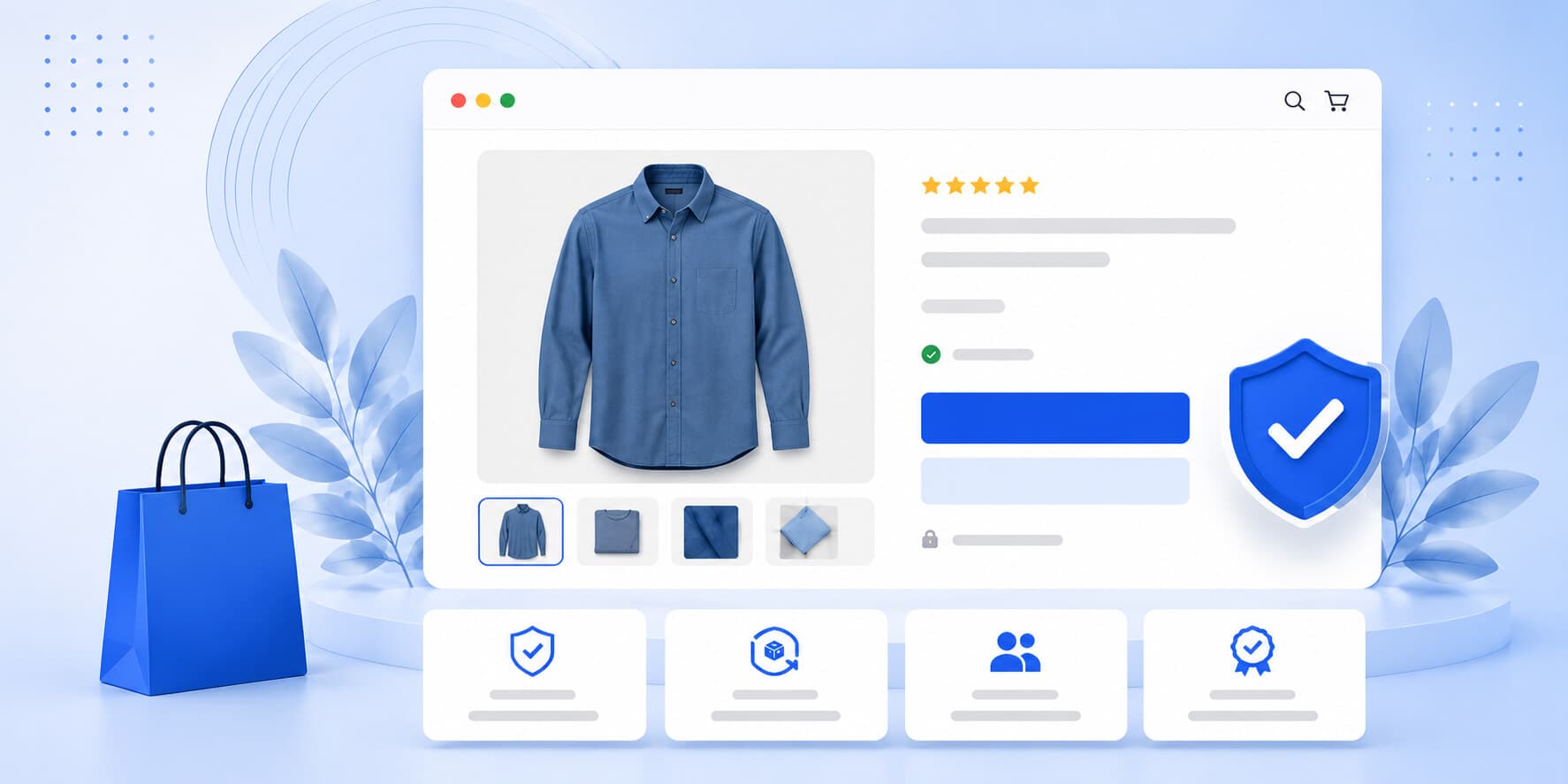
A trustworthy product page includes:
- clear product images
- accurate descriptions
- pricing transparency
- product specifications
- delivery information
- return details
- customer reviews
- secure checkout signals
- clear calls to action
The goal is to make the customer feel informed and reassured.
When users trust the product page, they are more likely to continue to checkout.
Why Product Pages Matter Before Checkout
Product pages matter because they are often the decision point between interest and purchase.
A user may arrive from an ad, search engine, social media post, or email campaign. Once they reach the product page, they need to find enough information to decide whether to buy.
Product pages help businesses:
- build customer confidence
- reduce purchase hesitation
- improve conversion rates
- answer product questions
- support trust before payment
- reduce abandoned carts
- improve user experience
- increase online sales
For businesses in Dubai, strong product pages can make the difference between a visitor leaving and a customer completing checkout.
A weak product page creates doubt.
A strong product page creates confidence.
Strong Product Pages vs Weak Product Pages
Strong product pages build trust.
Weak product pages create hesitation.
The difference is clear:
- strong pages provide clear information
- weak pages leave questions unanswered
- strong pages use high quality visuals
- weak pages rely on limited images
- strong pages show transparent pricing
- weak pages hide important costs
- strong pages include reviews or proof
- weak pages lack credibility signals
- strong pages guide users clearly
- weak pages create friction
A product page should not only look good.
It should help customers make a decision.
Why Customers Hesitate Before Checkout
Customers often hesitate before checkout because they are unsure.
They may like the product but still need reassurance. If the product page does not answer their concerns, they may leave or delay the purchase.
Common reasons customers hesitate include:
- unclear product details
- limited product images
- missing size or material information
- unclear shipping costs
- unclear return policy
- lack of reviews
- poor website design
- weak product descriptions
- no trust signals
- confusing checkout flow
These issues reduce confidence and increase cart abandonment.
Product pages should remove uncertainty before users reach checkout.
How Product Pages Build Trust
Product pages build trust by providing the right information at the right moment.
Clear Product Information
Customers need to understand exactly what they are buying.
Product information should be clear, accurate, and easy to scan.
This can include:
- product name
- key features
- product specifications
- size
- color
- material
- usage details
- included items
- care instructions
- warranty details
Clear product information reduces confusion.
It also helps customers feel more confident in their decision.
High Quality Product Images
Images are one of the strongest trust-building elements on a product page.
Customers want to see the product clearly before buying. Poor images can make the product feel less reliable or less valuable.
Strong product visuals should include:
- multiple angles
- close-up details
- lifestyle images
- scale references
- product variations
- clean backgrounds
- accurate colors
- zoom functionality
Better visuals help customers understand the product faster.
They also improve perceived quality.
Transparent Pricing
Pricing should be clear from the beginning.
Customers do not like unexpected costs at checkout. Hidden fees, unclear delivery charges, or confusing discounts can reduce trust.
Transparent pricing includes:
- clear product price
- visible discounts
- delivery cost information
- taxes when needed
- payment options
- installment options if available
- no hidden fees
Pricing clarity helps users feel safe continuing to checkout.
Customer Reviews and Social Proof
Reviews help customers feel that others have already bought and trusted the product.
Social proof reduces uncertainty because it shows real experiences from other buyers.
Social proof can include:
- customer reviews
- star ratings
- testimonials
- user photos
- best seller labels
- product popularity indicators
- trusted brand badges
Reviews can strongly influence buying decisions.
They give customers confidence before payment.
Shipping and Return Information
Shipping and return details should be easy to find.
Customers often hesitate when they do not know when the product will arrive or whether they can return it.
Important information includes:
- delivery time
- shipping cost
- return policy
- exchange policy
- refund conditions
- delivery locations
- order tracking information
Clear delivery and return policies reduce risk in the customer’s mind.
This makes checkout feel easier.
Secure Checkout Signals
Trust continues from the product page into checkout.
Customers need to feel that their payment and personal information are protected.
Trust signals can include:
- secure payment icons
- SSL indicators
- payment method logos
- trusted checkout messages
- privacy policy links
- clear contact information
- customer support options
This aligns with website development strategies that improve secure, user-friendly, and conversion-focused online shopping experiences.
Security signals help reassure customers before they enter payment details.
Product Page Design and User Experience
Product page design plays a major role in trust.
Even if the product is good, poor design can make the website feel unprofessional. A cluttered or confusing layout can reduce confidence and make users leave.
Strong product page UX includes:
- clean layout
- clear product title
- visible price
- easy-to-read description
- strong image placement
- visible add to cart button
- simple navigation
- mobile-friendly design
- fast loading speed
- clear trust signals
Good design makes the buying process feel easier.
When the page feels easy to use, customers feel more comfortable buying.
Product Descriptions and Trust
Product descriptions should do more than list features.
They should explain value, answer questions, and help customers understand why the product matters.
A strong product description should include:
- what the product is
- who it is for
- why it is useful
- what makes it different
- how it solves a need
- what details matter before buying
Descriptions should be clear and honest.
Overpromising can damage trust. Clear and accurate copy supports better customer expectations.
Mobile Product Pages
Many customers browse and shop on mobile devices.
If a product page is difficult to use on mobile, customers may leave before checkout.
Mobile product pages should include:
- fast loading speed
- easy scrolling
- clear product images
- readable text
- tap-friendly buttons
- simple variation selection
- visible add to cart button
- easy checkout access
Mobile experience directly affects conversion.
A strong mobile product page helps users move smoothly from interest to checkout.
Product Pages and Conversion Optimization
Product pages are central to conversion optimization.
Every element should support the customer decision. The page should reduce friction and make the next step clear.
Conversion-focused product pages include:
- strong product visuals
- clear descriptions
- trust signals
- visible CTA buttons
- simple product options
- transparent pricing
- customer reviews
- delivery details
- return information
- fast performance
This connects with user experience design strategies that improve e-commerce usability and checkout conversion.
A product page should guide users naturally toward purchase.
Common Product Page Mistakes
Many e-commerce websites lose sales because their product pages do not build enough trust.
Common mistakes include:
- poor image quality
- short or vague descriptions
- missing product details
- hidden delivery costs
- unclear return policy
- no reviews
- slow page speed
- weak mobile layout
- confusing product options
- unclear CTA buttons
These mistakes create uncertainty.
Uncertainty reduces conversions.
When Businesses Should Improve Product Pages
Businesses should improve product pages when users are visiting the website but not completing purchases.
This is especially important when:
- product page traffic is high
- add to cart rate is low
- checkout abandonment is high
- customers ask repeated questions
- mobile conversions are weak
- product pages look outdated
- reviews are missing
- product information is incomplete
- competition is increasing in Dubai
Improving product pages can directly support better e-commerce performance.
Small improvements can create stronger trust.
Strategic Reality Behind Product Page Trust
Trust is built through clarity.
Customers need to feel that the product is real, the business is reliable, and the buying process is safe.
A strong product page should answer:
- what is the product?
- why should the customer buy it?
- what does it include?
- how does it look?
- how much does it cost?
- when will it arrive?
- can it be returned?
- is checkout secure?
- what do other customers say?
The more clearly these questions are answered, the more confident customers become.
Trust is what moves users from browsing to checkout.
Real World Application
A business in Dubai improving product pages can create a stronger online shopping experience.
Product page optimization can help the business:
- build trust before checkout
- increase add to cart rates
- reduce abandoned carts
- improve customer confidence
- increase online sales
- reduce customer questions
- improve mobile shopping
- strengthen brand credibility
For example, an e-commerce business can improve product pages by adding better images, clearer product descriptions, reviews, shipping details, return policies, and stronger CTAs.
This makes customers feel more confident before checkout.
Product Pages and E-commerce Growth
Businesses scaling in Dubai, including Jumeirah, Jebel Ali, Deira and beyond, benefit from product pages that are designed to build trust and support conversions.
As online stores grow, product pages become more important because they influence every purchase decision.
Strong product pages support growth by helping businesses create:
- better user experience
- stronger customer trust
- higher conversion rates
- lower cart abandonment
- clearer product communication
- better mobile performance
- stronger e-commerce credibility
- more consistent sales
Growth in e-commerce depends on trust.
Product pages are where much of that trust is built.
Expert Perspective from The iBoost
At The iBoost, we build e-commerce experiences that focus on trust, usability, and conversion.
We design product pages that present products clearly, reduce hesitation, and guide users toward checkout with confidence.
Through e-commerce website development strategies that improve product presentation, trust, and conversion performance, we help businesses improve online shopping experiences across Dubai.
Product pages build trust before checkout by answering questions, reducing uncertainty, and creating a clearer path to purchase.
For businesses in Dubai, investing in product page optimization can improve conversions, customer confidence, and long-term e-commerce growth.
Frequently Asked Questions
Product pages are important because they help customers understand the product, build confidence, answer questions, and guide users toward checkout.
Product pages build trust through clear product information, high quality images, transparent pricing, reviews, shipping details, return policies, and secure checkout signals.
An effective product page includes strong visuals, clear descriptions, visible pricing, customer reviews, clear CTAs, delivery information, return details, and mobile-friendly design.
Customers hesitate when product details are unclear, images are limited, shipping costs are hidden, return policies are unclear, or trust signals are missing.
Businesses can improve conversions by optimizing visuals, descriptions, page speed, mobile usability, trust signals, customer reviews, and checkout guidance.